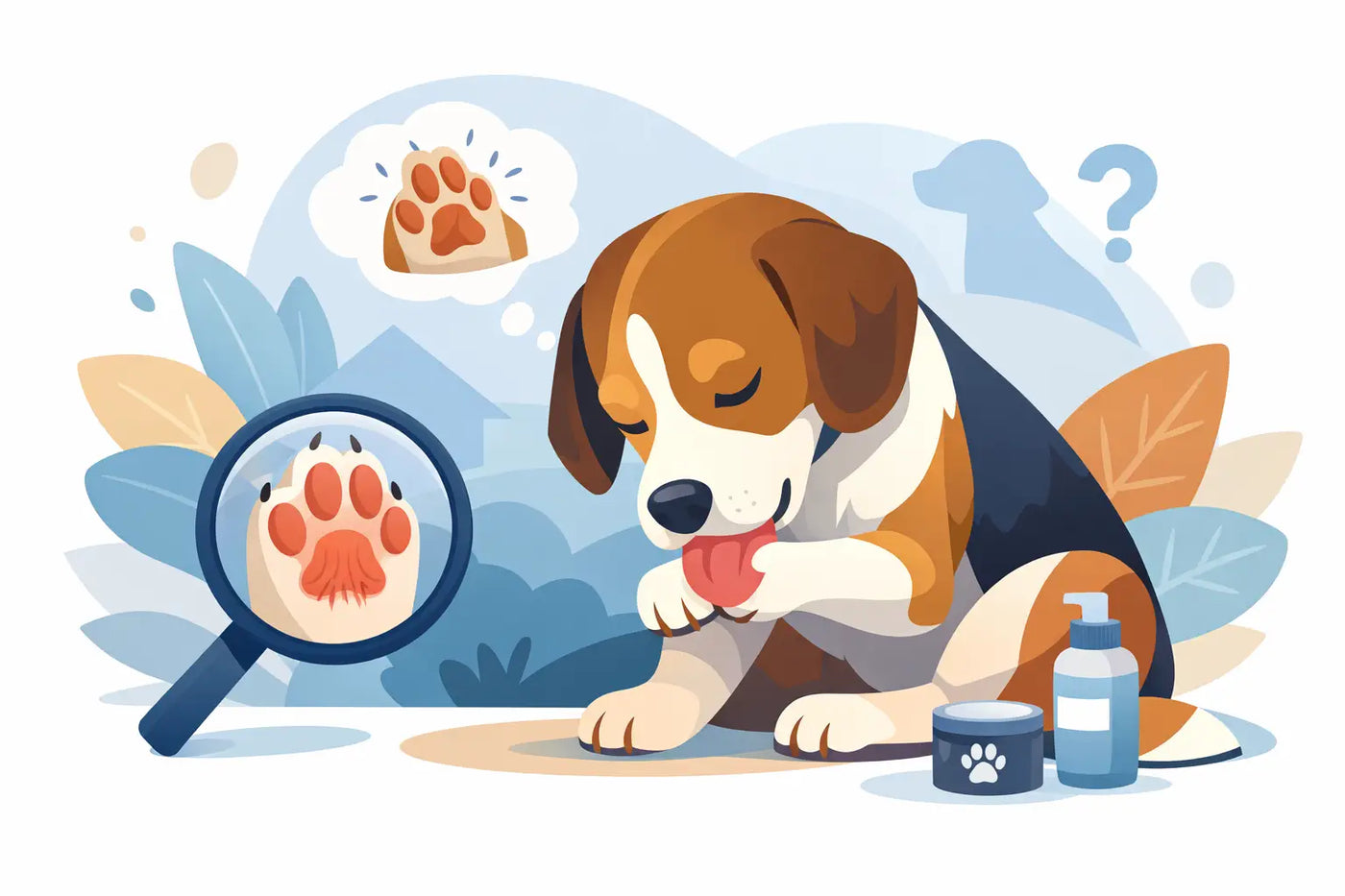
It is often first noticed on the sofa in the evening - that persistent licking of one paw, or all four. If you have wondered why your dog licks its paws, you are far from alone. Paw licking is common, but there is a big difference between normal grooming and behavior that occurs so frequently that the skin becomes irritated.
A dog's paws have to endure a lot. Gravel, rain, hot asphalt, pollen, slush, and long walks all take their toll. Therefore, it is not strange that the dog sometimes stops to lick its paws after being outside. But when the licking becomes recurring, intense, or seems difficult for the dog to stop, there is often a cause that is worth taking seriously.
Why does the dog lick its paws all the time?
The short answer is that it can be due to anything from dry skin to pain or stress. The slightly longer answer is that paw licking is almost always the dog's way of trying to soothe something. The dog is not licking to be troublesome - it is trying to manage itching, discomfort, or anxiety with the tool it has closest at hand.
If your dog licks its paws every now and then after a walk, play, or rest, it doesn't necessarily mean anything at all. But if you see red paw pads, discolored fur between the toes, small sores, or if the dog seems to get stuck in the behavior several times a day, then it is time to take a closer look.
Allergies are a common explanation
One of the most common causes of paw licking is allergies. This can involve pollen, grass, dust, mites, or something in the dog's food. Many dogs show allergic symptoms specifically in their paws, as the skin there is sensitive and often comes into direct contact with the environment.
What makes allergies a bit tricky is that they do not always look the same. Some dogs lick most during the spring and summer when pollen levels rise. Others have problems year-round and also develop itchy ears, red skin, or recurring skin infections. If the paw licking occurs in periods, it can provide a clue. If it never really goes away, both environment and diet may be worth reviewing with a veterinarian.
Irritation after walks and weather
Paws lead a pretty tough life, especially for dogs that love forest trails, beach walks, and daily rounds in all types of weather. Winter road salt, pebbles, hot asphalt, and wet grass can irritate the skin between the paw pads. Some dogs also react to floor cleaning agents or residues from lawns that have been treated outdoors.
In those cases, the licking usually occurs after the dog has been outside. The dog is simply trying to clean or soothe its paws. If you notice a clear pattern after walks, it can help to rinse the paws with lukewarm water and dry them thoroughly. Moisture that remains between the toes can otherwise make the problem worse.
Small injuries that aren't immediately visible
Sometimes the explanation is quite simple: something hurts. A splinter, a small cut, a cracked paw pad, a broken claw, or gravel stuck between the toes can be enough for the dog to start licking intensely. It doesn't have to bleed or be clearly visible from the start.
That is why it is smart to actually look closely at the paw when the licking concerns a specific foot. Check between the toes, around the claws, and on the underside of the paw pads. If the dog pulls the paw away, limps slightly, or reacts with tenderness, it is especially important to let a veterinarian assess the situation.
Paw licking can also be about stress
Not all causes are located in the skin. Some dogs lick their paws to wind down, especially when they feel understimulated, restless, or anxious. The behavior can start as something temporary but become a habit that is hard to break. A bit like people who bite their nails without thinking about it.
This is seen more often in dogs that have a lot of energy, receive too little mental activation, or have difficulty settling down. Changes at home can also play a part - new routines, loneliness, noise, moving, or other things that affect their sense of security. If the paws look quite normal but the licking mainly happens at rest, in the evening, or when the dog is left alone, the emotional aspect may be part of the explanation.
This does not mean the problem is any less real. Quite the opposite. Stress-related licking can become self-reinforcing because the skin becomes irritated by the licking itself, and then the dog has even more reason to continue.
Yeast and infections between the toes
When the dog licks a lot, the area becomes warm and moist, which is exactly the environment where yeast and bacteria love to thrive. Sometimes an infection is the cause from the start. Sometimes it comes as a result of long-term licking. Regardless of which, the result is often that the dog licks even more.
Signs to look out for are red skin between the toes, brown-colored fur, swollen skin, an unusual odor, or if the paw feels tender. Here, it is rarely enough to just wash it clean at home. Infections often need the right treatment to truly subside.
When is paw licking normal?
A little paw care is completely normal. Many dogs lick themselves briefly after a walk, after they have eaten, or before they settle down to sleep. It becomes more a question of quantity and intensity than whether the behavior exists or not.
You can often think like this: if the dog is easy to distract, the paws look healthy, and the licking only happens occasionally, then there is usually no major danger. But if the dog seems obsessed with licking, wakes up to continue, or develops visible skin changes, then it has moved from being normal to something that should be investigated.
How you can help at home first
The first step is almost always to observe the pattern. Does it happen after walks, at a certain time of year, after certain surfaces, or mostly during quiet moments at home? That information is unexpectedly valuable if you later need to seek help.
Then start simply. Rinse the paws after being outside if you suspect pollen, salt, or dirt. Dry thoroughly, especially between the toes. Check paw pads and claws regularly and keep the fur around the paws well-groomed if your dog has a lot of hair there where moisture easily gets trapped.
It can also be wise to think about the dog's daily life in general. Is it getting enough exercise, scent work, and calm routines? A dog that gets to use both its body and its mind usually finds it easier to relax without getting stuck in repetitive behaviors.
For some dogs, protective paw care helps during periods of cold, salt, or dry surfaces. For others, it is more important to address the root cause, especially if the itching is driven by allergies. This is precisely why there is rarely a one-size-fits-all solution for paw licking.
When you should contact a veterinarian
If the dog is licking so much that the skin becomes red, moist, swollen, or sore, it is time to book an appointment. The same applies if the dog is limping, in pain, smells bad from the paw, or if the problem recurs time and again. The longer a licking behavior is allowed to continue, the greater the risk that it becomes both a skin problem and a habit.
The veterinarian can help sort out whether it is a matter of allergies, infection, parasites, pain, or something else. Sometimes tests are required, sometimes a thorough examination and the right treatment are enough. The important thing is not to get stuck in guesswork for too long when the dog is clearly showing that something doesn't feel right.
Why does the dog lick its paws - and what does it say about the dog's daily life?
Often, paws tell more than you think. They tell stories about terrain, weather, activity levels, and sometimes even the dog's stress levels. A dog that runs with joy on trails, rocks, and lawns also needs paws that are healthy enough to carry the whole adventure. Therefore, paw care is one of those small daily routines that makes a bigger difference than you might initially think.
At Labbetass, we like everything that makes life with a dog a little simpler, a little softer, and a little more fun outdoors. And sometimes it actually starts with something as mundane as stopping, lifting a paw, and looking to see what the dog is trying to say.
If your dog is licking its paws more than usual, trust your gut feeling. Small changes are often worth catching early - not to get worried, but to give your four-legged friend a more comfortable everyday life, one step at a time.