The first night with a puppy at home is usually equal parts cuddles, chaos, and total infatuation. One moment it falls asleep in your lap, the next it is chewing on a slipper or looking for a safe place to crawl into. So, what do you actually need for a puppy? The answer is, thankfully, quite simple – you don't need to buy everything, but you do need the right things from the start.
It is easy to end up in "buy everything that looks cute" mode. But a puppy usually thrives best with a few, well-thought-out items that make everyday life calm, safe, and practical. Think less about an overflowing shopping cart and more about smart basic equipment.
What do you need for a puppy at home?
At home, it is primarily about safety. A puppy comes into a new environment with new sounds, new scents, and new routines. Therefore, it is wise to start with a sleeping area, food bowls, a few selected toys, and something to chew on.
A bed doesn't need to be fancy, but it should be soft, easy to wash, and placed in a quiet spot. Some puppies love a fluffy bed right away, while others prefer to lie on a blanket on the floor. It depends a bit on the breed, temperature, and personality. If you have a puppy that gets hot easily, a bed that is too thick might actually be less appreciated than you think.
Food and water bowls are obvious, but try to choose sturdy versions that don't slide around. It sounds like a small detail, but in everyday life, it makes a difference. A puppy that slides around after its food bowl won't have a particularly harmonious meal.
Toys are also necessary, but not twenty different ones at once. A few go a long way – ideally a soft toy for security, one that can be carried around, and a more durable chew toy. Puppies explore the world with their mouths, so it is good to give them the right things to bite into before they choose your furniture.
Food, treats, and things that make everyday life easier
Food is, of course, central, but there is no one-size-fits-all solution here. The most important thing is that the puppy gets a puppy food adapted to its age and size. Small breeds, large breeds, and sensitive stomachs may need different solutions. If the breeder or previous home used a food that worked well, it is often smart to start there and switch slowly later if needed.
Treats are good to have at home right away, but keep them small. A puppy doesn't need large snacks, just small rewards that are easy to give frequently. Potty training, recall, focus, and staying calm in new situations become much easier when you have something tasty close at hand.
Many also appreciate a small jar or bag for treats, so that rewarding isn't a whole project every time. It is these small everyday things that quickly make life with a puppy smoother.
Chew products can be worth their weight in gold during the puppy stage. They help both with itchy teeth and when the puppy needs to wind down. However, it is wise to choose according to size and keep an eye on the puppy while it chews, especially at the beginning. Not everything sold suits every puppy equally well.
What do you need for puppy walks?
Walking equipment is an area where many buy the wrong thing first and the right thing later. The most common mistake is getting something too big "so the puppy can grow into it." The problem is that a harness or collar that is too loose easily becomes unsafe and uncomfortable.
A well-fitting harness is often a safe choice for small puppies, especially in the beginning when everything outdoors feels new. It should fit securely without chafing or restricting movement. Some puppies walk well in collars from the start, but many find the harness softer and more forgiving during the first few weeks.
The leash doesn't need to be advanced. A regular, lightweight leash goes a long way. A retractable leash can wait until you have more focus and routine. In the beginning, simplicity is almost always best.
You also need poop bags, and preferably more than you think. In pockets, the hallway, the car, and your bag. It is the kind of thing you always miss exactly when you don't have it.
For those who want to be outdoors a lot, a small towel by the door can also be unexpectedly practical. Muddy paws, wet bellies, and muddy little adventures happen faster than you think.
Sleep, rest, and a calm start
What many underestimate is how much a puppy needs to sleep. When the puppy becomes wild, bitey, or hyper, it is often not a lack of activity – but a lack of rest. Therefore, it is smart to create a quiet place where the puppy can land several times a day.
A blanket, a bed, and a secluded corner can go a long way. Some use baby gates or a puppy playpen to make resting easier and to limit access to the entire home. It might feel a bit boring in theory, but in practice, it usually creates more calm for both puppy and human.
If you are considering a crate at home, it is important to think about how it is used. For some, it works as a cozy sleeping spot with an open door, while others prefer a bed in a corner. The important thing is not to follow a trend, but to choose what actually makes your puppy feel safe.
Cleaning and puppy-proofing – not the most fun, but very important
A puppy needs more than just cute things. You also need things that protect your home and make accidents less dramatic. Washable blankets, paper towels, and cleaning supplies adapted for pets will be used. More than once.
Puppy-proofing is at least as important as shopping. Cords, shoes, children's toys, plants, and small objects on the floor quickly become the puppy's projects. Feel free to do a lap around your home at eye level for a small dog. You will suddenly see how many exciting and inappropriate things are actually within reach.
This is also a good time to decide which rooms should be off-limits and which are okay. Clarity from the beginning usually makes daily life easier than changing rules after a few weeks.
Grooming and hygiene from the start
Even if your puppy doesn't need a full spa routine right away, it is wise to have some basic things at home. A brush that fits the fur type, a mild dog shampoo for when needed, a towel, and ideally something to get the dog used to paw handling.
Nail trimming, brushing, and dental care become easier if you start calmly early on. Not with perfection, but with habit. A puppy that learns that being handled is normal often has a much easier life later on.
If you have a breed with more fur or a dog that will be out in the woods and fields often, grooming also becomes more than just cosmetic. Then it is about comfort, mats, dirt, and how easy it is to keep the dog fresh between major baths.
What you don't need to buy right away
This is where many save both money and space. You rarely need ten toys, multiple beds, advanced feeding systems, or expensive gadgets for activity the first week. Puppies grow fast, habits change, and you get to know your dog quite quickly.
Some love carrying soft stuffed animals around; others only care about chew toys. Some prefer sleeping in a bed, others on a cool floor. Therefore, it is wise to start with the basics and add more later.
The same applies to clothes. If you have a very small, cold-sensitive, or short-haired puppy, a coat might be relevant, but it is far from a must for everyone. Buy according to need, not just according to the season's cutest picture.
A simple checklist for the first time
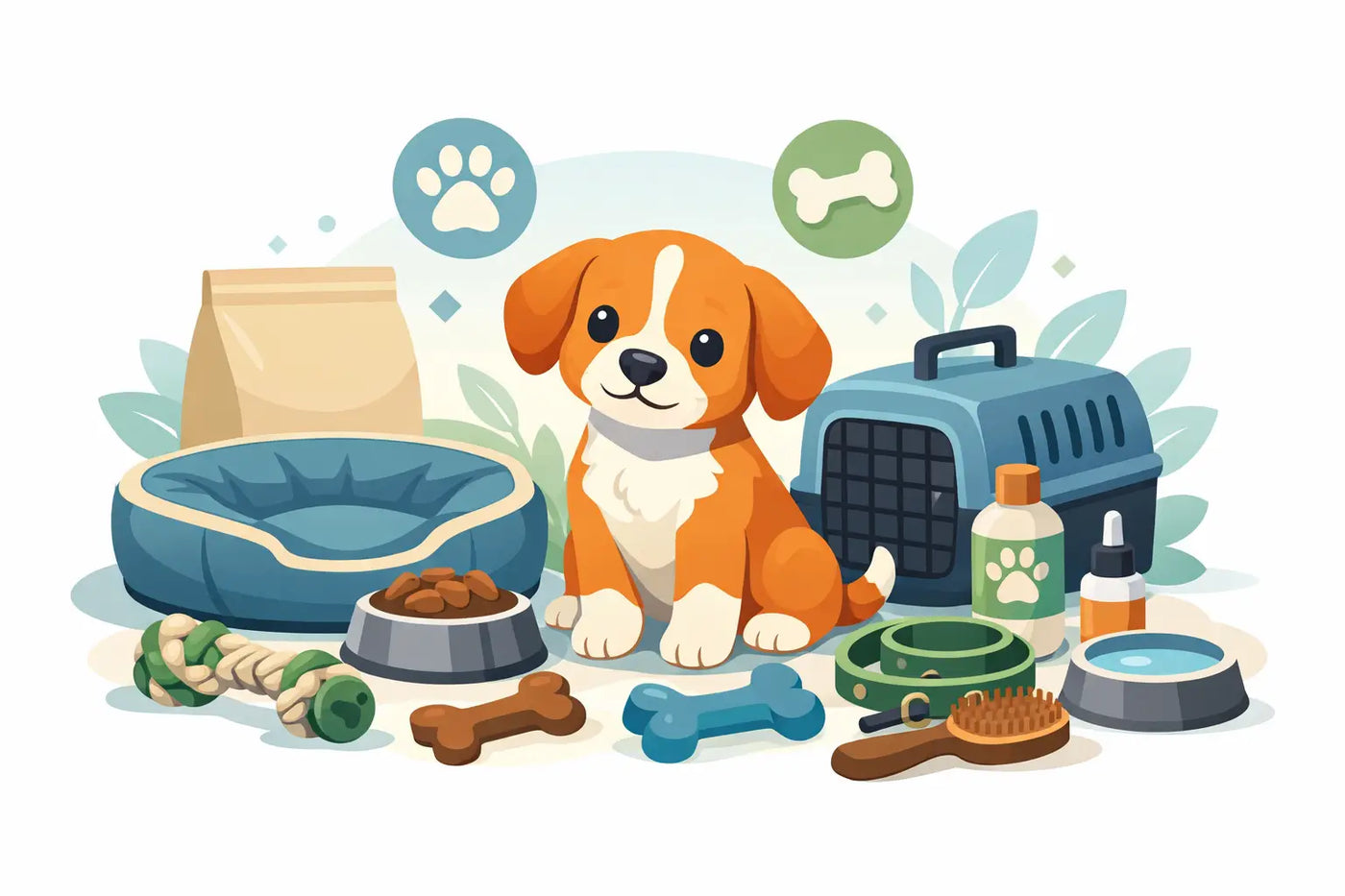
If you want to make it easy for yourself, it is often enough to start with: a bed or blanket, a food and water bowl, puppy food, small treats, a harness or collar, a leash, poop bags, a few toys, something to chew on, a brush, a towel, and cleaning supplies for small accidents at home.
It doesn't have to be more complicated than that. Once daily life is rolling, you will quickly notice what your specific puppy uses a lot and what mostly just stands in a corner.
For those who like a more organized way to find inspiration, equipment, and smart choices for dog life, you can also take a look at Labbetass. The idea is the same as in a good puppy purchase – less stress, better overview, and things that actually fit everyday life.
The nicest thing you can give a puppy isn't actually the biggest shopping bag. It is a calm start, clear routines, and a few things that make the home safe from the very first day.