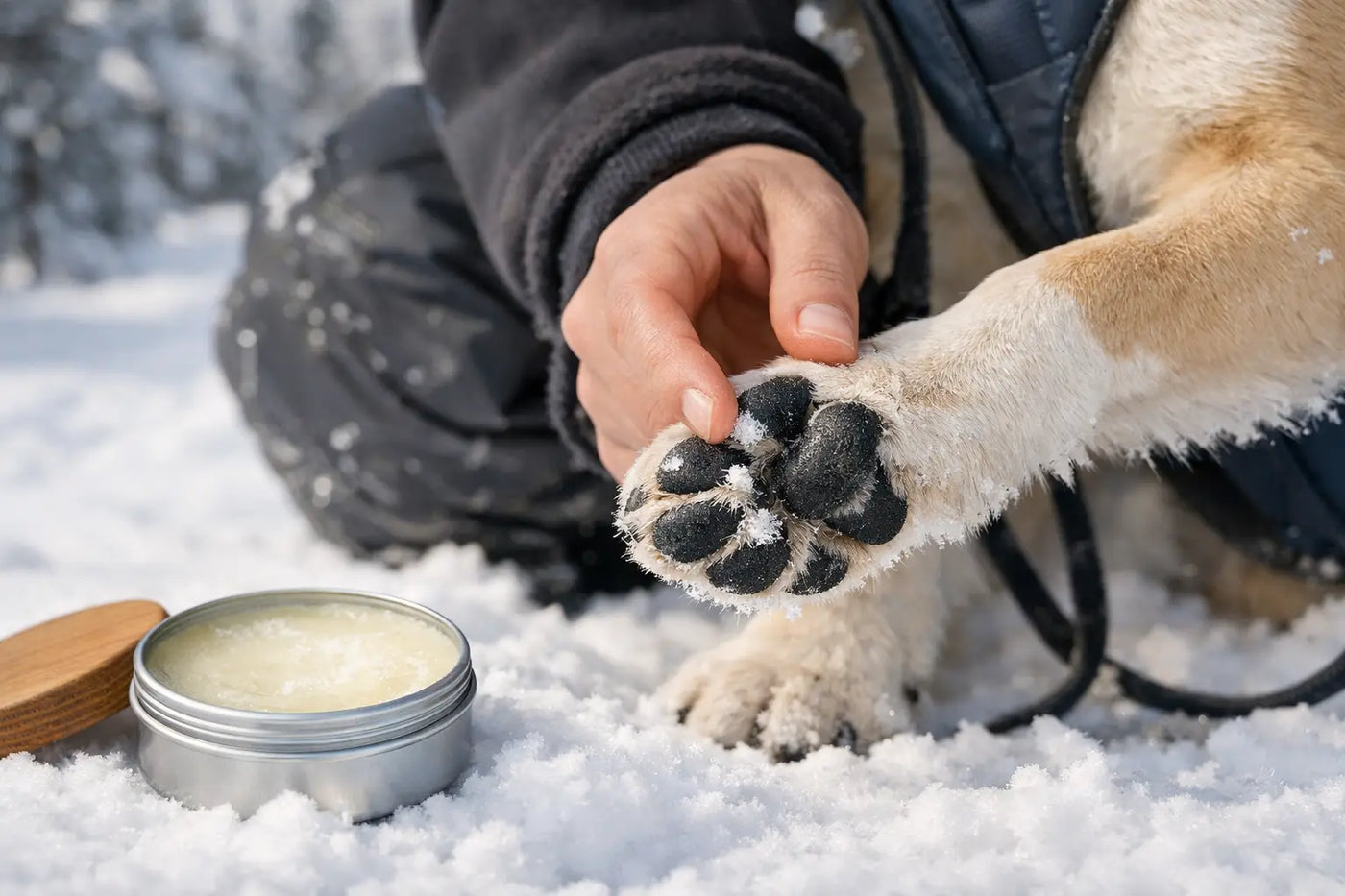
When the sidewalks are salted, the ground is frozen, and the walk ends with small clumps of ice between the toes, the paws have to work hard. A review of paw balm for winter is therefore not just about a nice jar in the hallway. It is about finding a protection that works for your dog's specific everyday life - from quick morning walks in the slush to long weekend adventures in the forest.
Paw balm can be a small detail with great significance during the winter months. The right formula helps the paw pads feel softer, can create a protective barrier against moisture and road salt, and makes the paw routine a calm moment together. However, not all paw balms suit all dogs, and the best solution depends on fur, activity level, weather, and how sensitive the paws already are.
Review of paw balm for winter: what we look for
A good winter paw balm should be easy to use, yet handle the reality outside the door. We think the consistency is crucial. A balm that is too hard easily ends up unused in the bathroom cabinet, while a very thin product can disappear before you have even made it down the stairs. The best feeling is often a soft, rich balm that can be warmed between the fingers and massaged in without messy stress.
The ingredient list is also worth a moment of attention. Many dog owners prefer mild, moisturizing ingredients like oils, butters, and waxes. They can help care for dry paw pads and create a temporary protection against winter weather. Since some dogs like to lick their paws after application, it is wise to choose a product that is developed for dogs and use it according to the instructions on the packaging.
The scent matters less to the dog than to us, but a heavily perfumed balm can be unnecessary. A subtle scent, or no scent at all, often feels most thoughtful in a product that is to be used regularly. We also appreciate packaging that is easy to open with cold hands and easy to carry in a pocket or bag.
Protection is more important than a silky feeling
A paw balm can feel fantastic immediately upon application, but the winter test takes place outside. When the dog walks on wet asphalt, gravel, and salted sidewalks, the product needs to stay on long enough to be useful. Thicker balms often have an advantage here, especially before the walk.
At the same time, there is a clear trade-off. A very greasy balm can make the floor slippery at home and attract dirt if used in too large a quantity. Therefore, start with a thin layer. Massage it into the paw pads and between the toes, wait a minute, and wipe off the excess before you go out. This is often more than enough.
When paw balm makes the biggest difference
Some dogs have resilient paws all year round and mostly need extra care when the cold hits. Others react quickly to dry air, road salt, or long walks. If your dog suddenly stops often, licks their paws intensely, or avoids putting a paw down, it may be a sign of irritation. That is when it is time to take a break, rinse clean, and take a closer look.
Paw balm is particularly suitable as a preventive part of the winter routine. Apply a thin protective layer before the walk when the roads are salted or the snow is coarse and icy. Afterward, you can rinse the paws in lukewarm water, dry them thoroughly, and apply a little balm again if the paw pads feel dry. This combination is often more helpful than only applying balm when problems have already arisen.
For dogs with a lot of fur between their toes, it may be worth keeping the fur well-groomed. Less fur between the paw pads can mean fewer snow clumps and make it easier to reach with the balm. If you are unsure about how the fur should be trimmed, ask a knowledgeable dog groomer or veterinarian for advice instead of taking chances at home.
How to use paw balm without any fuss
The most sustainable routine is the one that actually gets done. Keep the balm near the leash or the towel in the hallway, so it becomes a natural part of the walk start. Many dogs accept the handling better if you start with short, calm moments and reward with praise or a small treat.
Apply to clean and dry paws. Take a small amount, warm it between your fingertips, and work it over the paw pads. Don't forget the edges of the pads and the area between the toes, where salt and ice like to get stuck. If the dog has small cracks or irritated skin, you should be extra gentle and avoid rubbing.
After the walk, cleaning is just as important. Salt that remains can continue to irritate, even if the paws look fine on the surface. Rinse the paws, dry carefully with a soft towel, and check that no gravel grains, ice chips, or small wounds are hiding between the toes. For many families, this becomes a cozy two-minute routine that also allows you to detect changes in time.
Paw balm or dog boots?
It is not always a choice between one or the other. Paw balm can be a convenient everyday protection for the dog that prefers to go barefoot and needs some help against dry, salted surfaces. Dog boots may be better in extreme cold, longer trips on icy surfaces, or when the paws need more relief.
Some dogs think boots are perfectly fine after some training, while others walk as if the floor has disappeared beneath them. In that case, a good paw balm can be a more realistic alternative. However, if the road salt is heavy or the paws are already injured, boots often provide a more comprehensive physical protection. Adapt according to the dog's signals and your usual walking environments.
What a good paw balm cannot solve
Paw balm is care and protection, not a substitute for veterinary help. Deep cracks, bleeding, swelling, obvious pain, or recurring limping need to be assessed by a veterinarian. The same applies if the dog licks their paws obsessively or if the skin between the toes becomes red and foul-smelling.
It is also good to have reasonable expectations. A balm can reduce the feeling of dryness and provide a protective layer, but it does not make a dog immune to sharp ice edges, chemicals, or many hours on frozen ground. Shorter walks when the weather is at its harshest, paw checks, and proper drying are still part of a kind winter plan.
Our verdict for winter paws
A paw balm worth its place in the hallway should feel simple, mild, and reliable. Rather choose a product you can use consistently than an advanced solution that just stands there. For everyday winter walks, a moisturizing, slightly richer balm is often a wise choice, especially combined with clean paws and a quick check after each trip.
At Labbetass, we like products that make it easier to take care of the small details that mean a lot for the dog's well-being. The winter air can be crisp and lovely, but the paws deserve care after every adventure. Make the balm a warm routine in the hallway, and you can continue to enjoy the season together - one paw print in the snow at a time.