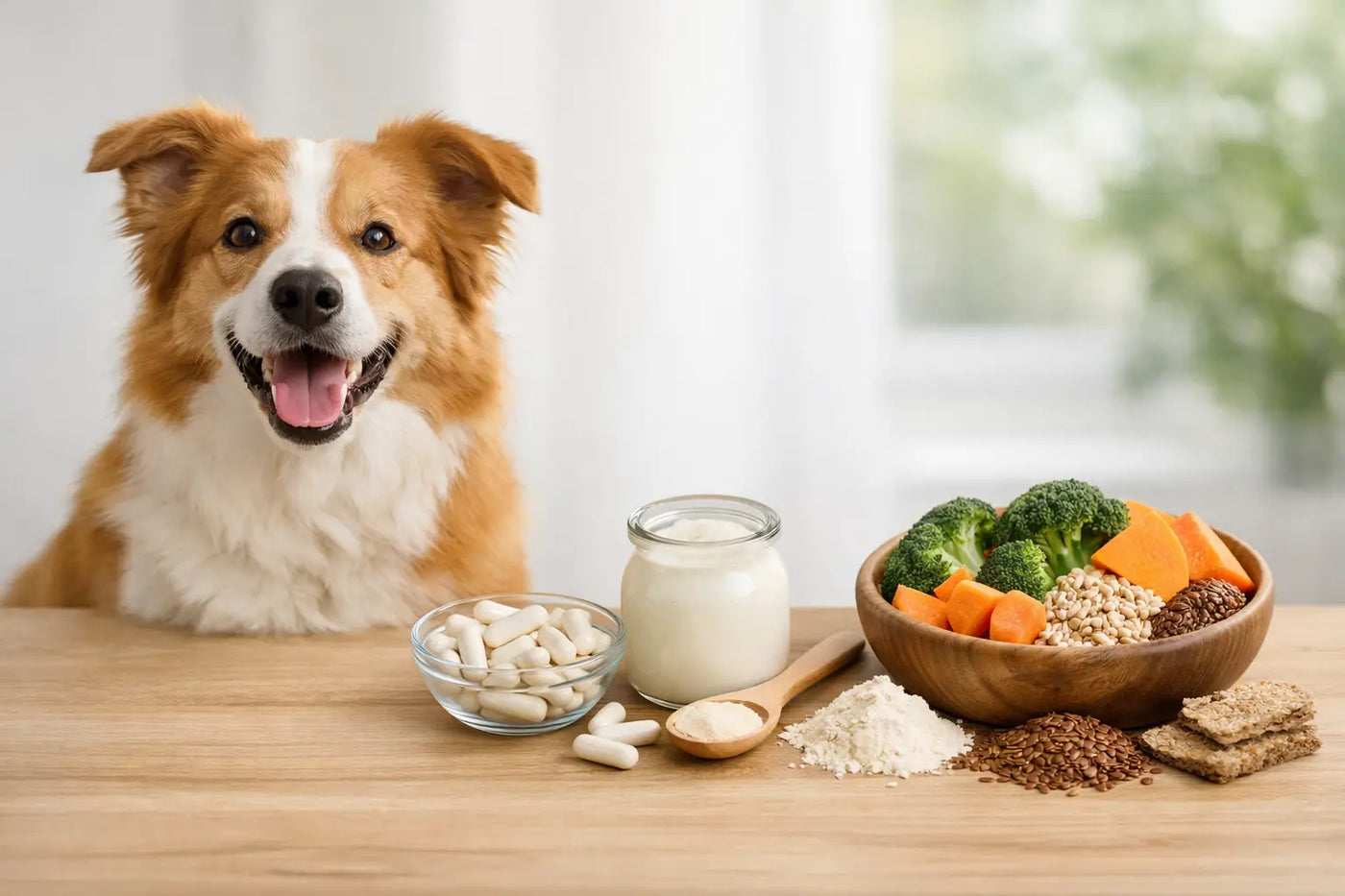
Loose stools just before the morning walk, hard stool after a weekend with less movement, or a sensitive stomach that seems to react to the slightest change - the question of probiotics or fiber for dogs often arises when you want to help your four-legged friend in a gentle way. Both can be great support for the stomach, but they serve different purposes. The most important thing is to start with what your dog’s stomach is actually trying to tell you.
Probiotics or fiber for dogs - start with the symptoms
A dog's gut is home to billions of microorganisms that work on digestion, the immune system, and stool consistency. When this balance is disrupted, the stomach can become upset. This can happen after antibiotics, stress, environmental changes, diet changes, a trip, or a slightly too generous treat from the grill.
Fiber, on the other hand, is a part of food that helps the gut work at a steadier rhythm. Certain fibers bind fluid and can make loose stools firmer. Others help increase volume and can make things easier when stool is dry or difficult to pass.
This means the choice is rarely about which option is best in general. It is about whether your dog needs support for the gut flora, help regulating stool, or a veterinary assessment before you change anything at all.
When probiotics might suit a sensitive dog stomach
Probiotics consist of living, beneficial bacterial cultures selected to support the gut microbiome. A supplement can be a practical choice for temporary imbalance, especially if the dog has recently been treated with antibiotics or has been stressed by a new daily routine, kennel stay, or trip.
A dog with temporarily loose stools, more gas than usual, or a stomach that becomes sensitive during diet changes can sometimes benefit from probiotics. It is not a quick fix that replaces the right diet or veterinary care, but it can be a gentle supplement for a limited period.
Always choose a supplement formulated for dogs. Human products may contain the wrong dosage or ingredients that are not suitable for your dog. Follow the instructions on the packaging and do not introduce several new stomach products at the same time. If you make one change at a time, it becomes much easier to see what helps.
After antibiotics and stressful days
Antibiotics are sometimes necessary, but the treatment can also affect the bacteria in the gut. Therefore, probiotics are sometimes recommended as support during or after a course. Always check the timing with your veterinarian, as different medicines and preparations may need to be given with intervals.
Stress is another common stomach disruptor. A long car trip, moving house, a new family member, or an intense dog event can take its toll on the stomach. Here, probiotics can fit in as part of a calmer routine with familiar food, water breaks, and a little extra recovery at home.
When fiber is a better choice
Fiber is often the first thing you think of when a dog is constipated, but the right type of fiber can also be helpful for recurring loose stools. Soluble fibers absorb fluid and can contribute to more formed stool. Insoluble fibers aid bowel movements and can be valuable when the stomach feels sluggish.
For dogs that don't get enough daily exercise, don't drink enough, or have a tendency to become hard in the stomach, fiber can be part of the solution. However, fiber must always be consumed with enough water. More fiber without extra fluid can in some cases make constipation worse.
There are ready-made fiber supplements for dogs, but also fiber in food adapted for sensitive digestion. Some use small amounts of fiber-rich raw materials recommended by a veterinarian. How much is appropriate depends on the dog's size, food, age, and issues, so start cautiously and monitor the stool for a few days.
Fiber may require more patience
With fiber, it is easy to want to increase the amount immediately when you don't see an effect on the first day. Don't do that. A quick change can cause gas and more stomach pain. Instead, add a little at a time and keep the rest of the routine stable - the same food, approximately the same walk times, and no new chew bones during the evaluation.
If the dog has problems with anal glands, a steady, moderately firm stool can also be part of the big picture. Fiber can help some dogs achieve better stool volume, but recurring issues should always be discussed with a veterinarian. There are often several possible causes.
How to choose without over-treating
If the stool is loose after stress, antibiotics, or a sudden diet change, probiotics may be the most logical first support. If the dog is hard in the stomach, poops rarely, or has stool that fluctuates depending on fluid and activity, fiber and better fluid intake may be more relevant.
But there is overlap. Some products combine bacterial cultures with prebiotic fibers, i.e., fibers that act as nutrition for good gut bacteria. For a dog with recurring but mild stomach issues, this can be convenient. At the same time, it becomes harder to understand which part makes a difference, and combination products are not automatically right for everyone.
Also look at the whole picture around the food bowl. Have you recently switched food? Does the dog get many different treats on the walk? Has anyone in the family started sharing table scraps? A sensitive dog stomach likes predictability. A good stomach supplement goes further when the foundation is simple and consistent.
Give the stomach the best possible conditions
A daily life with calm routines often does more than one might think. Serve the same complete food during the evaluation, measure out the portions, and ensure that fresh water is always available. Regular walks stimulate the gut, and a nice trip in the woods can be just as good for the mood as it is for the stomach.
Avoid testing new food, probiotics, fiber powder, and several new snacks during the same week. It is tempting when you want to help quickly, but the gut needs a chance to respond to one thing at a time. Feel free to write down what the stool looks like, how often the dog poops, appetite, and energy level. It provides a clearer picture if you need to consult a veterinarian.
For puppies, seniors, and dogs with known diseases, it is wise to ask a veterinarian before giving supplements. The same applies to dogs that take medicine or have had a bad stomach for a long time. What works well for an energetic adult dog after a stressful weekend is not always appropriate for a dog with a different health background.
When stomach problems require a veterinarian
Dietary supplements are for mild and temporary issues - not for acute symptoms. Contact a veterinarian if the dog has blood in the stool, repeated vomiting, clear abdominal pain, fever, is lethargic, refuses to drink, or is at risk of dehydration. Seek advice early for puppies and small dogs, as they can be affected faster.
Recurring loose stools, prolonged constipation, weight loss, or altered appetite also need to be examined. Parasites, food reactions, inflammation, and other conditions can look like a simple sensitive stomach at first. Getting the right help is caring, not making a big deal out of small symptoms.
When the stomach is just a little out of balance, it is often enough to slow down, choose a well-considered support, and let the routines do their job. The best solution is the one that gives your dog calm walks, a good appetite, and a stomach that lets you focus on the next lovely moment together outdoors.