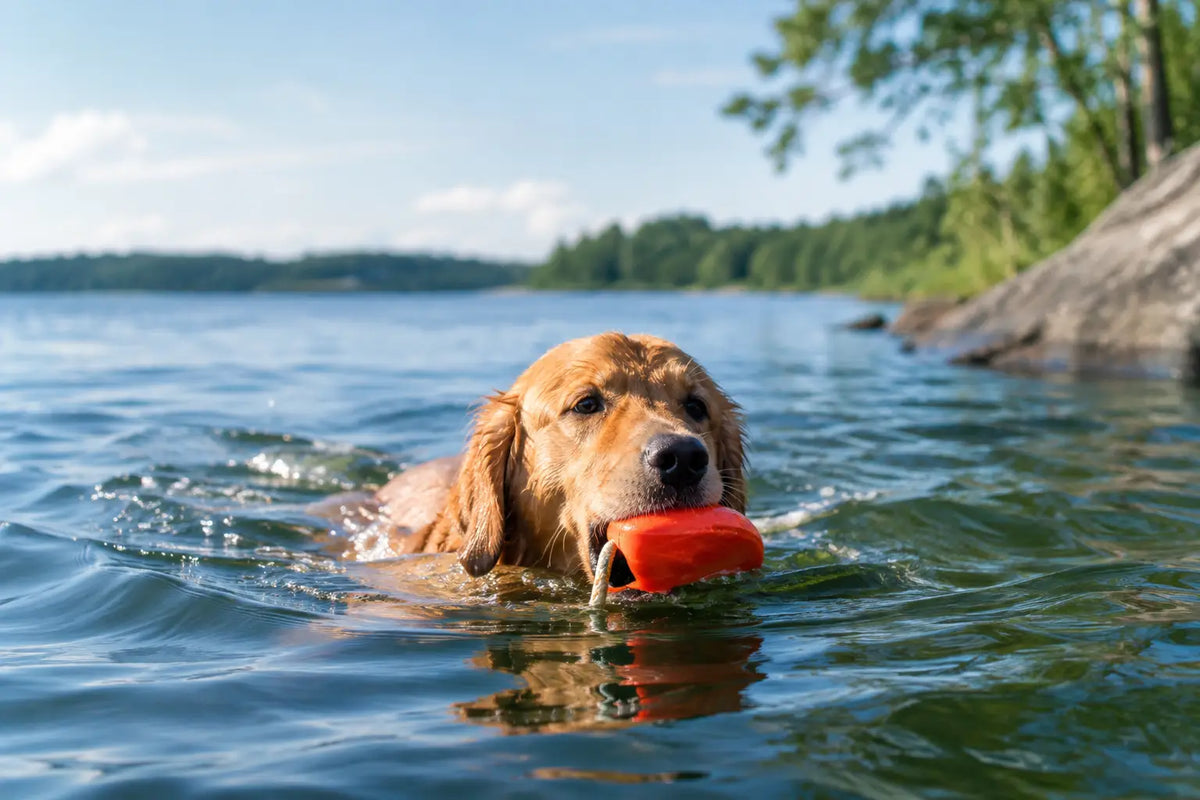
On a warm summer day, it is hard to find a happier sight than a dog splashing at the water's edge. But is it safe for dogs to swim in lakes? Usually, yes – for many dogs, a dip is fun, cooling, and provides low-impact exercise. At the same time, you need to assess the location, the water, and your specific dog before jumping in together.
The best dog swimming spot is rarely the one that looks most inviting from a distance. A quiet cove with a clean shore, a soft bottom, and nearby shade is often a better choice than a steep dock or a beach crowded with people and boats. With a little bit of water safety, a day at the lake becomes a wonderful time for the whole family, both on two legs and four.
Can dogs swim in lakes at any time?
No, it depends on the lake, the weather, and the dog's condition that day. Healthy adult dogs that enjoy water can usually swim when the water is clean and the temperature is comfortable. But even a seasoned swimmer can become tired, cold, or stressed faster than you might think.
Start calmly, especially if your dog is unaccustomed to water. Let them enter from a shallow shore at their own pace instead of coaxing or throwing them in from a dock. Being forced into the water can create insecurity and make future swims less enjoyable. A ball or favorite toy can be good motivation, but only throw it far enough that the dog can easily turn back.
Puppies, older dogs, and dogs with heart, joint, or respiratory problems often need shorter sessions in the water. Talk to your veterinarian if you are unsure about what is right for your dog's health. A dog in pain or with reduced stamina should not have to struggle to stay afloat, no matter how much they want to join in.
Start by checking the water
The most important thing before a lake swim is the water quality. If the water looks murky, smells foul, or is unusually colored, it is wise to choose another location. The same applies if you see dead fish, lots of foam, or a thick film on the surface.
Be extra vigilant for algae blooms, especially during warm and still periods. Blue-green algae, which are actually cyanobacteria, can be dangerous to dogs. They may appear as green, blue-green, or yellowish streaks and clumps in the water, but they are not always easy to identify with the naked eye. If there is a warning at the beach, or if you feel the slightest hesitation, let your dog skip the swim and drink clean water instead.
A dog that has bathed in suspicious water or licked its fur afterward can become acutely ill. Vomiting, diarrhea, unsteadiness, drooling, tremors, or abnormal fatigue after a dip are signals to take seriously. Contact a veterinarian immediately and explain where the dog has been swimming.
Also avoid water near heavy boat traffic, outlets, ditches, or areas where you cannot judge the bottom. There may be trash, fishhooks, sharp objects, or strong currents. A still lake can also become deep quickly, so do not let your dog swim far out just because the surface looks calm.
The dog's safety in and by the water
All dogs can swim to some extent, but not all are confident or enduring swimmers. Breeds with short noses, short legs, heavy bodies, or thick fur may have a harder time keeping above the surface and can become overheated or exhausted quickly. Even the most eager water lover needs breaks.
A dog life jacket is a wise choice when you are paddling, boating, swimming in deeper water, or practicing swimming. Choose a model that fits securely without chafing and has a handle on the back. The handle makes it easier to help the dog out of the water without pulling on the collar.
Feel free to have a long lead at new swimming spots, but use it with consideration. A line can get caught in branches, rocks, or docks if the dog is swimming freely. On an open, shallow beach, it can provide extra control, while it should often be removed in water with obstacles.
Also keep an eye on the heat. Swimming cools for the moment, but a dog can still suffer from heatstroke during a long day in the sun. Provide shade, fresh drinking water, and quiet breaks between play sessions. Lake water should not be the dog's thirst quencher – many dogs get stomach issues if they drink large quantities, and the water may contain things you don't want them to ingest.
After the dip: small routines that make a big difference
When the swim is over, it is tempting to just shake off the fur and pack up the picnic. A few extra minutes of care can, however, make the trip much kinder to skin, paws, and ears.
Rinse the dog with clean water if it has bathed in dirty water, among algae, or near birds and boats. Then dry the fur thoroughly, especially if the dog has thick undercoat or skin folds. Moisture that lingers for a long time can irritate the skin and smell less than pleasant in the car on the way home.
Take a quick look between the toes and under the paw pads. Small stones, twigs, and sharp shells can get stuck without the dog showing it immediately. Also check the ears, especially if your dog has floppy ears or often has issues. Redness, bad odor, lots of scratching, or head shaking after swimming can be signs of irritation and are worth following up on.
A soft, absorbent towel, a water bottle, and a collapsible bowl are things that should be in your summer bag. For dogs that love water, a durable life jacket and a toy that floats can also make the trip both safer and more fun. It is this kind of simple equipment that lets you focus on the moment instead of on what is missing.
When is it better to skip the lake swim?
Sometimes the most caring decision is not to swim at all. If the dog is sick, has a fresh wound, has been operated on recently, or seems lethargic, choose a quiet walk in the shade. The same applies if they are clearly hesitant about the water. Sitting by the shore, sniffing the grass, and getting a bowl of cold water can be just as nice of an outing.
Skip the swim during algae warnings, in cold water, or during thunder and strong winds. After heavy rain, the water quality can also change, especially near runoff from roads and fields. If you are at a public beach, you must also respect signs and local rules. Dog bans are often about hygiene, conservation, or consideration for other beachgoers.
For dogs that have previously had ear problems, skin issues, or stomach trouble after swimming, it can be good to keep a simple record during the summer. Write down where you swam and how the dog felt afterward. Then it will be easier to spot patterns and choose the places that actually work for you.
Make lake swimming a safe habit
The best swimming memories are rarely built from long swims. They are about a dog that gets to choose the pace, a human who keeps track of the surroundings, and a quiet moment on the towel afterward. When you find your favorite cove, you can follow the same little routine every time: check the water, offer fresh drinking water, keep the swim a reasonable length, and dry the fur before heading home.
Let the next trip to the lake be an opportunity to be close, not a test of how brave or fast the dog is. A cautious paw in the water's edge can be just as much summer as a big jump from a dock.