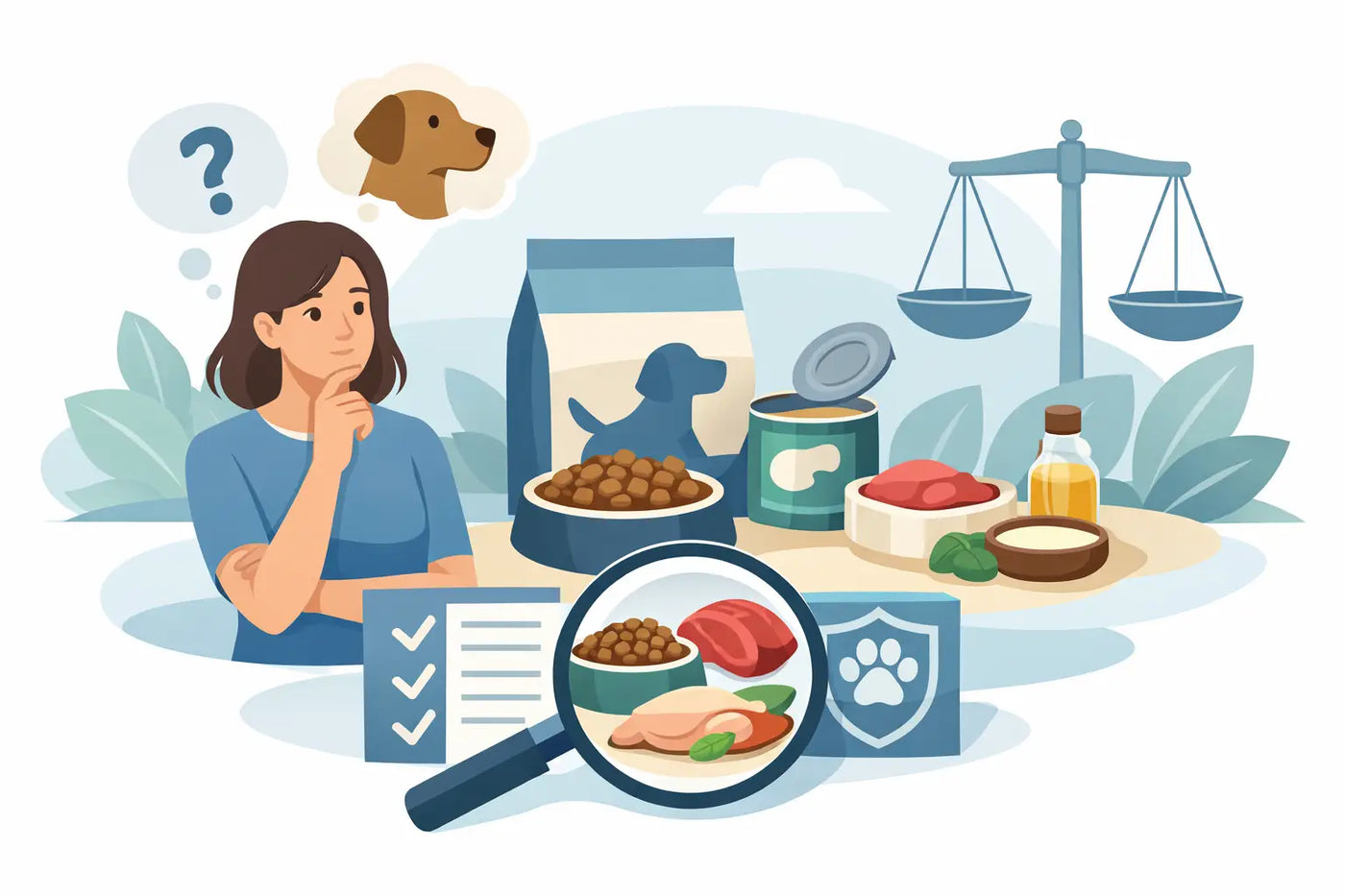
The food bowl says more about everyday life than you might first think. A dog that eats well has the energy for walks, recovers better after play, and often feels more satisfied in both stomach and mood. Therefore, the question of how to choose dog food is not just practical—it's about finding something that actually works in your specific life.
There is also a small trap here: the food that is perfect for the neighbor's energetic spaniel does not have to be the right choice for your couch-loving senior or your young dog with a sensitive stomach. Packaging promises a lot, but what matters is how the food matches the dog's age, size, activity level, and any potential issues. When you look at it that way, the choice becomes less confusing.
How do you choose dog food according to the dog's needs?
Always start with the dog, not with the bag. It sounds obvious, but many choose based on trends, price, or nice packaging and then try to make the dog fit the choice. It is often easier if you first think about three things: life stage, energy requirements, and stomach.
A puppy needs a different nutritional approach than an adult dog. Puppies grow quickly and need food adapted for development, while adult dogs often thrive best on a more stable maintenance diet. Senior dogs, in turn, may need food that is gentler on the body and easier to maintain a healthy weight on. If you have a large dog breed, it is extra wise to look at food made for larger bodies, because the strain on joints and growth can look different than in small dogs.
Activity level also plays a big role. A dog that joins in on long forest hikes, runs a lot, or trains several times a week uses more energy than a dog that mostly goes for quiet neighborhood walks. Food that is too energy-rich for a calm dog can lead to unnecessary weight gain. Food that is too lean for a very active dog can make it feel tired, lose body condition, or become unusually hungry.
Then we have the stomach—often what determines fastest whether a food works. If the stool becomes irregular, the dog becomes gassy, scratches more, or seems uninterested in the food, then it is worth pausing. A good food is not just a food with nice words on the bag, but one that your dog actually thrives on every day.
What should you look for on the ingredient list?
Many people feel uncertain here, and that is understandable. Ingredient lists can feel dry and a bit difficult to interpret. But you don't need to analyze everything down to the smallest detail. It goes a long way to read with a few simple lenses.
First, look at which ingredients are highlighted early in the list. Many dog owners want to see clear protein sources and straightforward information about what the food actually contains. That doesn't mean the most expensive one is always the best, but it is often a good sign when the content feels clear rather than vague.
Then check if the food seems to fit the dog's everyday life. A high-energy food might be great for an active dog but too much for a calm family dog. If your dog has a sensitive stomach, it may be wise to choose food with a simpler composition instead of one with many different protein sources and additives at once.
It is also good to be a little wary that marketing often sounds grander than reality. Words like natural, premium, or holistic can sound reassuring, but they don't tell the whole truth on their own. Always read the actual content and think about how the dog reacts in everyday life.
Grain-free, fresh food, or dry food?
This is a question that often sparks strong opinions, but the answer is less dramatic than many think. There is no single format that suits all dogs.
For many, dry food is the easiest choice for everyday life. It is convenient to store, easy to portion, and available in many varieties. For households with jobs, children, excursions, and full calendars, it is often a very practical option.
Fresh food can be perceived as more appetizing for some dogs, and many owners like the feeling of less processed food. At the same time, it requires more planning, more space in the fridge or freezer, and a bit more routine around serving. It fits well in some homes, but not in all.
Grain-free is often chosen by dog owners who want to try something gentler for the stomach or skin. For some dogs, it works fine. For others, no difference is noticed at all. That is precisely why it is wise not to choose by trend first, but by effect.
How do you change dog food without the stomach protesting?
Even a good food can get off to a bad start if the change happens too quickly. A dog's stomach rarely likes sudden shifts, especially if it is already a bit sensitive. Therefore, it is almost always smart to change gradually over about a week, sometimes longer.
Mix in some of the new food with the old and increase the amount step by step. This gives the stomach time to adjust, and you also get a chance to see how the dog reacts. If the stool changes significantly, the appetite drops, or the dog seems uncomfortable, it might be wise to slow down the pace or rethink.
Also, take the opportunity to keep the rest of the diet quite stable during the change. If you simultaneously change treats, start with chew bones, and test new toppings, it becomes difficult to know what is causing what. The simpler you keep it, the easier it becomes to determine if the food fits.
Common signs that the food fits - or doesn't
The best receipt rarely comes from the packaging. It comes from the dog itself. A dog that eats the right food usually has steady energy, fine stool, reasonable body condition, and a coat that feels healthy. It doesn't need to look perfect every day, but the overall picture usually feels stable.
If the food doesn't quite land right, the signals can be more subtle than you think. It can involve recurring loose stools, itching, the dog leaving food often, or it gaining or losing weight even though the amount seems reasonable. Some dogs also become noticeably hungrier or less satisfied between meals when the food doesn't quite match their needs.
That doesn't always mean the food is bad. Sometimes it's just wrong for that particular dog. And that is an important distinction. The goal is not to find the most acclaimed food, but the one that works best in your home.
Price, quality, and everyday life must go together
It's easy to feel that you should choose the most expensive option to be a truly good dog owner. It's not that simple. A more expensive food can be worth the money for some dogs, especially if they have specific needs or noticeably thrive better on it. But a mid-range food that the dog does well on can be just as good a choice if it is sustainable for your everyday life.
There is a point in thinking long-term. If a food is so expensive or complicated that you constantly need to switch, compromise, or supplement in a panic, it rarely becomes a calm solution. A good choice should work both for your wallet and in the kitchen, even when life is full of work, rain gear, and muddy paws.
For many dog families, it is therefore smart to think practically: is the food available regularly, does it work in your routines, and does it feel reasonable to stick with? Those types of questions are at least as important as nice promises on the front of the bag.
When should you ask for help?
If the dog has recurring stomach problems, clear itching, refuses to eat for longer periods, or has difficulty maintaining weight, it is wise to talk to a veterinarian. The same applies to puppies, older dogs, and dogs with illnesses where food can play a bigger role than usual.
In those cases, it is rarely worth guessing for too long. The right support can save both time and worry, and sometimes even money, because you avoid jumping between several foods without a plan. It can also provide security if you have already tested a few options but still feel unsure about what the dog actually needs.
Choosing dog food is fundamentally less mysterious than it seems. Look at the dog in front of you, read the ingredients with a calm gaze, and give each choice some time to show what it is capable of. When the food works, it shows in the small things every day - more joy on the walk, a calmer stomach, and that nice feeling that everyday life just flows a little better.