It is often noticed only after the walk. The dog licks one of its paws intensely, stops more often than usual, or begins to walk a bit gingerly on asphalt that felt perfectly fine just a moment ago. If you have wondered how to protect dog paws in a way that actually works in everyday life, the answer is rarely a single product. It is more about the right habits, the right timing, and reading the terrain before the paws start to complain.
Dog paws are durable, but they are not invulnerable. They handle forest paths, gravel roads, and long walks better than many think, but they also wear down from salt, ice, hot asphalt, coarse gravel, and constant moisture. For an active family dog that joins you everywhere, paw care therefore becomes a fairly obvious part of a safe outdoor life.
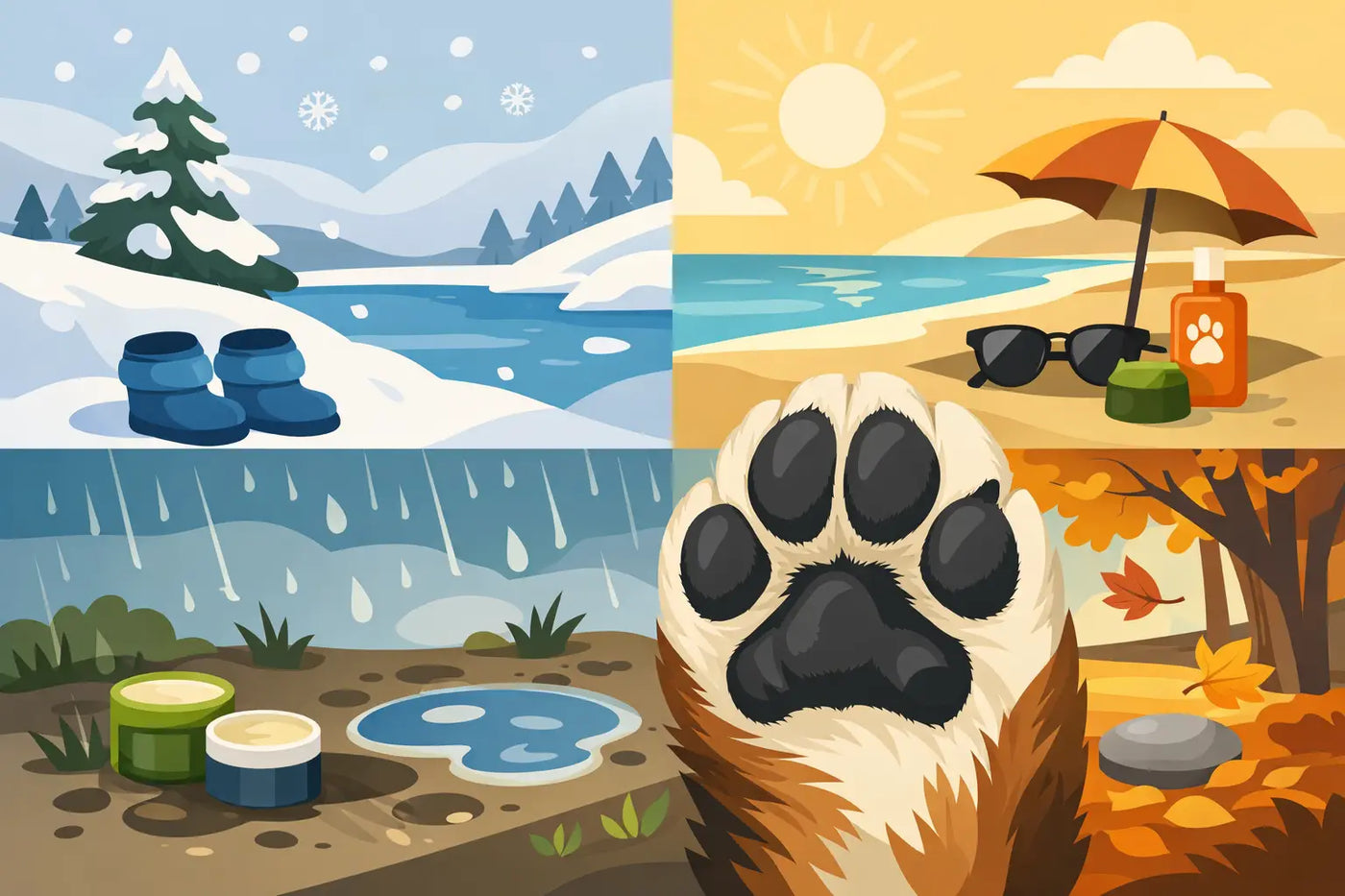
How do you protect dog paws in different weather?
The simple answer is that it depends on the season, the dog, and the activity. A city walk in January has completely different requirements than a forest trek in July. Some dogs have thick, strong paw pads and seem almost unaffected. Others quickly develop dry cracks, red spaces between the toes, or small sores that hurt more than they look.
In winter, it is primarily road salt, ice clumps, and cold that cause issues. Salt dries out the skin and can sting quite a bit in small cracks. Snow packed between the paw pads turns into hard lumps that chafe with every step. Here, it helps to lubricate the paws before the walk with a protective paw balm and to rinse them off when you get home. For some dogs, paw protectors or boots are a better choice, especially in urban environments where salt is heavily applied.
In the summer, heat is the big culprit. Asphalt, stone tiles, and docks can become much hotter than the air. A dog that happily follows you out often doesn't notice the problem until the skin has already become irritated. The best protection then is to choose walking times with cooler ground, seek shade, and let grass or forest trails be the primary choice when the sun is blazing. If you wouldn't want to stand barefoot on the surface for a few seconds yourself, it is often too hot for the dog as well.
During rainy periods, it is moisture that can cause problems instead. Paws that are constantly wet become softer and more sensitive to abrasion. This applies especially to dogs that walk a lot on gravel, rocks, or city streets. Therefore, dry the paws thoroughly after the walk, even between the toes, and keep an eye on whether the skin begins to look red or shiny.
The most common problems with dog paws
Many paw ailments start quite discreetly. A bit more licking than usual, a dog that slows down on stairs or wants to walk in the ditch instead of on the road can be early signs. Cracked paw pads are common when the skin has become too dry. Small cuts occur after glass, sharp stones, or crusty snow. Redness between the toes can be due to moisture, irritation, or dirt and salt being left on for too long.
There are also dogs that have recurring problems because the fur between the paw pads gets too long. Then snow, gravel, and dirt accumulate more easily, and the weight distribution becomes uneven. A simple paw trim can make a big difference, especially during the winter months.
If the dog is clearly limping, bleeding, has a swollen paw, or does not want to put weight on the leg, do not try to fix everything at home. A veterinary assessment is needed in those cases. Paws are used all the time, and even minor injuries can become chronic if the dog continues to put weight on them.
How to build a simple paw routine
Taking care of the paws doesn't have to be complicated. What works best are often small things done regularly. Take a quick look at the paws after the walk. Feel if the paw pads are very dry, if something is stuck, or if the skin between the toes looks irritated. It takes less than a minute but allows you to discover problems before they become major.
Do not wash the paws unnecessarily with harsh products. Lukewarm water goes a long way in removing salt, mud, and dust. If you use dog shampoo, do so sparingly and choose a mild one. Too much cleaning can dry out the skin and create new problems instead of solving them.
Drying is at least as important as washing. Many forget the area between the toes, but that is precisely where moisture likes to remain. A soft towel and a few extra seconds make a big difference, especially for dogs that are out often or have thick fur.
Paw balm, boots, or nothing at all?
This is the most common question after how to protect dog paws, and it is also where the answer becomes a bit more nuanced. Paw balm is suitable for dogs with dry paw pads, in cold weather, and as a barrier against salt and dirt. It is easy to use and often feels like the most everyday alternative. The downside is that some dogs lick it off immediately, and it doesn't protect as much against sharp surfaces or extreme heat.
Dog boots or paw protectors can be fantastic for the right dog and the right situation. They provide clearer protection against salt, hot ground, icy crust, and sharp gravel. At the same time, not all dogs accept them without protest. The fit must be good, otherwise, they chafe easily. Therefore, boots work best when introduced calmly at home and used in contexts where the need is actually clear.
For many family dogs, a combination is enough. Paw balm for everyday use, boots when the weather or surface requires more. It doesn't have to be all or nothing. A short neighborhood walk on dry ground requires less protection than a long winter excursion in city snow or a hot day on sun-drenched pathways.
Trim the fur with care
The fur around the paws is easy to forget, but it affects more than you might think. Fur that is too long under and between the paw pads makes it easier for snow and dirt to get stuck. It can also cause the dog to have poorer grip on slippery floors and wet stones. At the same time, you shouldn't cut too close or too much, as the skin becomes more exposed.
The goal is simple - keep the paws tidy and functional. If you are unsure, a dog groomer or veterinarian can show you how it should look for your specific dog's fur type.
Indoor habits that actually help outdoors
Protection for the paws doesn't always start out on the walk. Dogs that have very dry indoor environments, a lot of heated air in winter, or slide around on slippery floors can have more stressed paws than one might initially think. Regular nail trimming helps the dog place its foot correctly. Good grip at home also reduces wear, especially for older dogs.
Diet also plays a role, even if it doesn't solve everything. A dog with sensitive skin can sometimes show it in its paws as well. If the paws are constantly dry or irritated despite good care, it might be worth reviewing the overall situation with a veterinarian.
When extra protection is worth it
Not all dogs need full paw gear for every walk. But certain situations justify a little more care. Puppies and older dogs are often more sensitive. Active dogs that join you on longer trips are exposed to more wear and tear. City dogs encounter more salt and hard surfaces, while rural dogs more often have problems with mud, icy crust, and uneven terrain.
If your dog loves to tag along on everything you do outdoors, it is wise to have paw protection as a natural part of your gear, much like a water bottle and poop bags. It makes it easier to adapt to the day rather than reacting only when the dog is already sore. For many, it is precisely that type of simple, well-thought-out everyday life that makes outdoor living smoother, and that is where brands like Labbetass often feel at home - as a friendly aid in finding things that actually get used.
How do you know if the paws are healthy?
Healthy paws look whole, feel supple, and do not make the dog hesitant in its stride. Paw pads can be durable, but they should not be hard in a cracked way. The skin between the toes should not be angrily red or have a strong odor. The dog should also not lick or bite its paws excessively after regular walks.
The most important thing is really to get to know your own dog's baseline. Some dogs have naturally coarser paw pads, others softer. Some love boots after two attempts, others hate them for a long time. When you see what works for you, paw care becomes less of a project and more of a small habit that follows you year-round.
The best thing about well-cared-for paws is not that they look perfect, but that they allow the dog to continue doing what it loves - running toward the path, sniffing for a long time at the edge of the grass, and joining you outside, regardless of whether the day brings frost, rain, or warm evening sun.