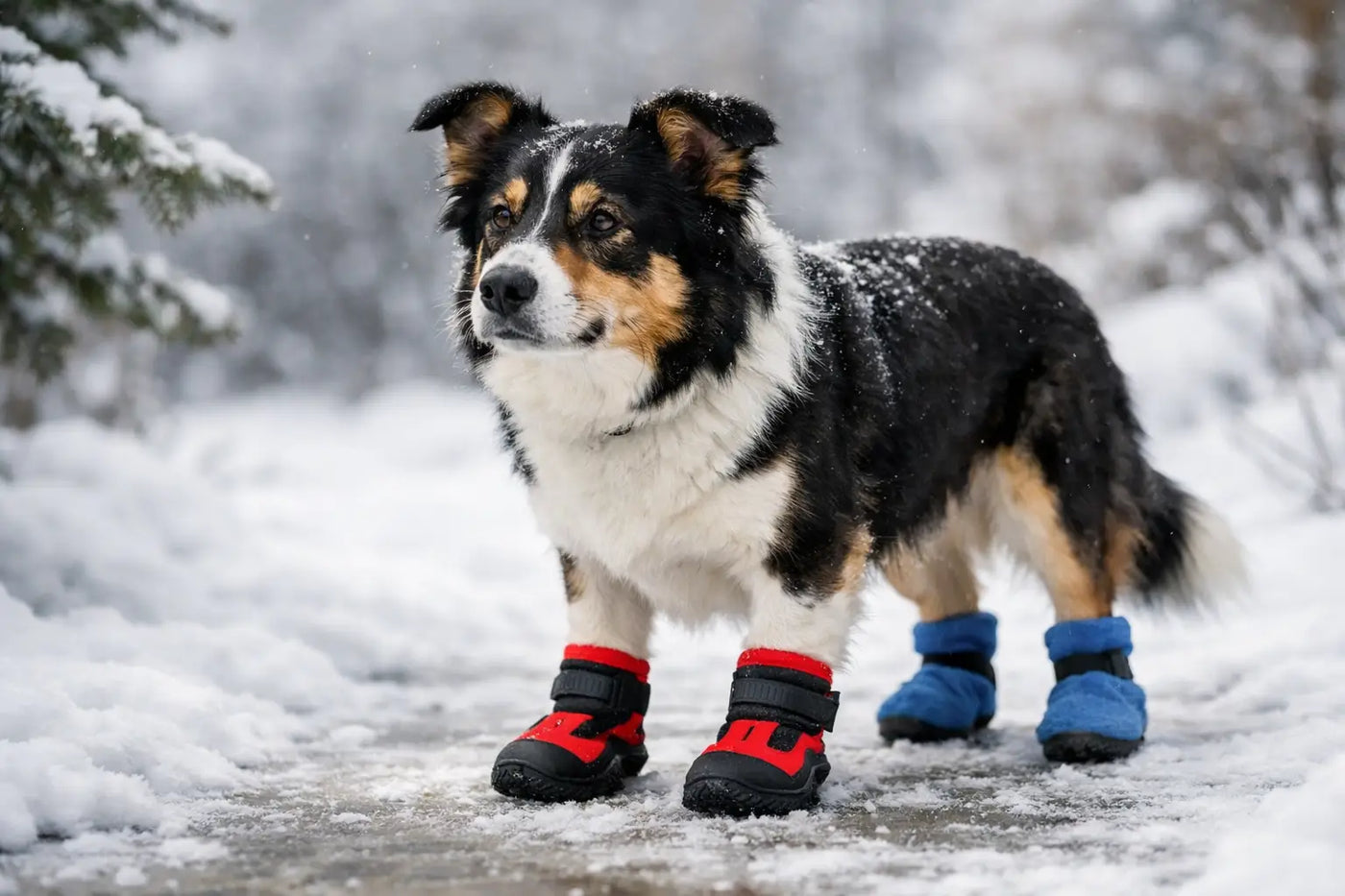
That quick potty break can feel completely different when the sidewalk is white with road salt and snow gets stuck between the paw pads. The question of dog shoes or winter paw socks is therefore not just about how cute it looks, but about making the winter walk more comfortable for the dog. The right paw protection can reduce discomfort from cold, ice, salt, and wetness – but the choice depends on the dog's daily life, paws, and temperament.
Some dogs happily keep running through snowdrifts without the slightest concern. Others start lifting their paws, stop at the roadside, or lick intensely between their toes after a few minutes. It is the dog's signals, rather than the temperature on the thermometer, that should guide what you need.
Dog shoes or paw socks in winter – what is the difference?
Dog shoes are made for outdoor use and usually have a durable sole that protects against the ground. They are a good choice on salted streets, frozen gravel roads, hard-packed snow, and during longer walks. A good dog shoe sits firmly around the paw and should allow the dog to move as naturally as possible.
Paw socks are softer and thinner. They can be made of fleece, knitted material, rubberized fabric, or an anti-slip material. Many use them indoors for better grip on slippery floors, to protect a wound, or as a lighter layer during short outings. For a dry, calm walk in light snow, paw socks can work well, but they rarely replace dog shoes when the ground is wet, cold, and salty.
The simple rule of thumb is that dog shoes protect against the ground itself, while paw socks primarily provide soft protection and a little extra warmth. There are exceptions, of course. A durable paw sock with a rubberized underside can work perfectly for some dogs, especially during short rounds in a quiet residential area.
When dog shoes are the best choice
Dog shoes come into their own when winter is at its most demanding. Road salt can irritate the skin between the paw pads, ice can cause small cracks, and hard snow can form uncomfortable clumps in the fur. This is especially true for dogs with lots of hair between their toes, but even short-haired dogs can become sore from cold and salt.
For the active dog that joins in on forest walks, winter hikes, or longer treks along plowed paths, shoes are often the most practical option. The sole provides better shielding from a cold and uneven surface, and the material generally resists moisture better than a sock.
Dog shoes can also be a wise choice if the dog has sensitive paw pads, a minor injury that needs protection according to veterinary advice, or recurring problems with irritated paws during winter. Here, the fit is more important than the design. A shoe that slides around can chafe, and a model that is too tight can hinder blood circulation.
Look for shoes with adjustable closures, a flexible sole, and a shape that fits your dog's paws. The front paws are often slightly larger than the back paws, so please measure each paw while standing. The dog then puts weight on the paw just as it does during a walk.
Signs that the shoe fits well
The dog should be able to put the entire paw down without limping or splaying its toes unnaturally. The shoe should stay on when the dog walks, turns, and trots, but you should still be able to fit a finger into the opening. Check the paws after the first few outings. Redness, chafing, or damp fur are signs that something needs to be adjusted.
It is common for the dog to walk a bit stiffly the first time it wears shoes. The high steps and the puzzled look usually go away with calm training. Start at home on a non-slip floor, reward with treats, and let the dog wear the shoes for a few minutes before you go outside. A positive start makes a big difference.
When paw socks are sufficient
Paw socks suit dogs that primarily need comfort, warmth, or better grip. For an older dog that slips on wooden floors, a pair of anti-slip socks can create more security at home. They can also be a soft protection during recovery, when the dog needs to be prevented from licking a paw, or when a paw pad needs relief according to a veterinarian's recommendation.
Outdoors, paw socks work best when it is dry, the walk is short, and the ground is not salted or icy. They are often easy to put on, appreciated by dogs that dislike stiffer shoes, and can be nice to have as a reserve in your pocket. But they easily absorb moisture and snow. When they get wet, they cool rather than warm, and then it is time to take them off.
For small dogs, puppies, and dogs with extra thin paw pads, paw socks can be a good first step in winter training. They get used to the feeling of something on the paw without having to start with a heavier shoe. Then you can determine if the protection is enough for your regular walks.
Look at the dog, not just the weather
Two dogs can have completely different needs even though they live in the same area. A Nordic, well-coated dog can thrive in several degrees below freezing, while a small, short-haired companion dog gets cold and paw-sore quickly. Age also plays a role. Puppies have not always built up resilience yet, and seniors can be more sensitive to both cold and slippery surfaces.
The fur between the toes is another detail that is easily forgotten. Long hairs collect snow into small ice balls that press against the skin. Keeping the fur between the paw pads well-trimmed can make the winter walk significantly more comfortable. Inspect the paws when you get home and rinse away salt and dirt with lukewarm water if you have walked on treated roads.
Paw balm can be a nice complement, especially for dry and cracked paw pads. However, it does not provide the same protection against burning road salt, sharp ice edges, or soaked surfaces as a pair of well-fitting dog shoes. See it as skincare for the paws, not as a complete alternative to protection when conditions are tough.
How to choose without unnecessary purchases
Start by thinking about your most common walks. Are they short and mostly around the block? Then a pair of durable paw socks or simple shoes might suffice. Do you walk long distances on salted sidewalks, travel to the mountains, or spend weekends on snowy trails? Then dog shoes with soles are often a better investment.
The material needs to suit the use. Water-repellent shoes are practical in slush, but should still dry properly between outings. Breathable models can be more comfortable on longer walks, while a more insulated shoe suits a cold dog on really cold days. There is rarely one pair that is perfect in all weather, so choose based on your daily life rather than a nice product photo.
Keep a towel by the door and make the paw check a calm routine. Wipe carefully, feel for cracks, and look between the toes. When the dog learns that paw care means warmth, praise, and a moment close to you, it becomes easier for both of you.
At Labbetass, we think winter life should result in more wagging tails, not more interrupted walks. Regardless of whether your dog ends up in shoes or socks, the best choice is the one that keeps the paws dry, comfortable, and ready for the next little adventure out in the winter air.