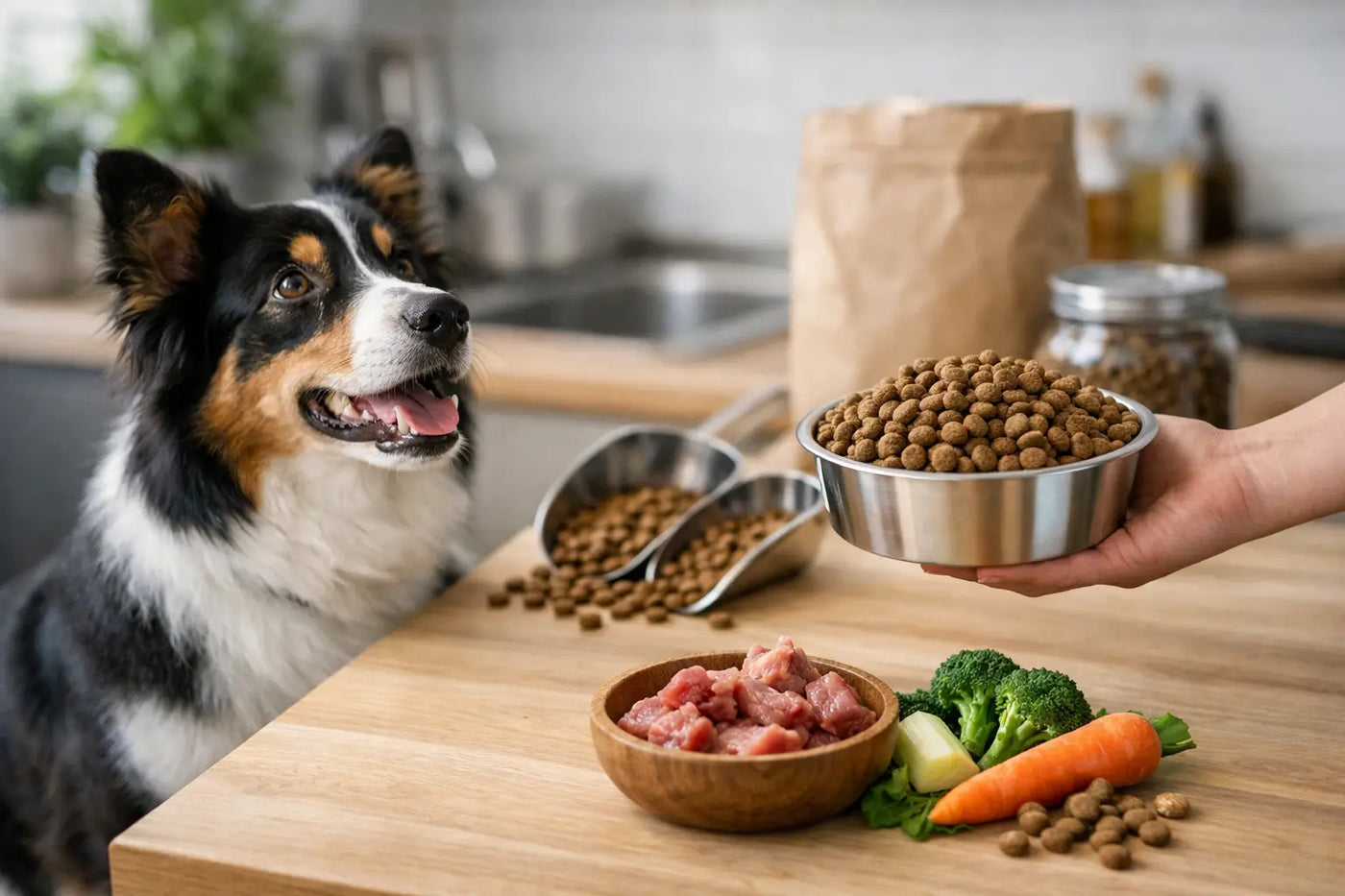
It is often noticeable in the food bowl before it shows up anywhere else. A dog that suddenly leaves food, gets an upset stomach, or loses some of its usual energy says quite a lot without uttering a word. Therefore, a good dog food review is not just a matter of taste or price - it is about finding a food that actually works in everyday life, on the walk, in the car to the forest, and at home on the kitchen floor.
For many dog owners, the problem is not a lack of choices, but rather the opposite. The shelves are full of bags with fine promises of shiny fur, a strong stomach, and lively paws. However, what suits a young, active dog does not always suit an older sofa companion, and a premium food is not automatically the right choice if the stomach protests. This is where a more down-to-earth review becomes useful.
Dog food review - what should you look for?
The first thing many check is the ingredient list, and that is wise. But it doesn't say everything on its own. A food can look good on the bag and still work only half-well for your particular dog. That is why you need to read with two sets of glasses at the same time - partly what the food promises, and partly how the dog actually feels on it.
Start with the protein and fat sources. For a normally healthy dog, clearly specified animal ingredients are often positive, but how much is appropriate depends on the life stage and activity level. A dog that runs, trains, or spends a lot of time outdoors may need more energy than a less active dog that is mostly satisfied with neighborhood walks and hanging out on the sofa.
Then comes tolerance. Some dogs can handle almost anything, while others react to chicken, grain, or too much fat. If your dog has a sensitive stomach, it is rarely worth chasing the trendiest bag. A simpler, stable food that the dog feels good on is often the better choice.
How we read food more honestly
A review that only says "my dog loved it" rarely goes very far. Many dogs eat happily the first week, especially if the food smells strong or contains a lot of fat. The real assessment comes after a few weeks, when you can see the whole picture.
Look at the stool, the energy, the coat, and the appetite. Is the stomach stable? Does the dog stay full on a reasonable amount? Does the coat look healthy? Is the energy even, without the dog feeling either lethargic or overcharged? It sounds simple, but it is often those signals that provide the most useful review.
Price per bag is also a bit tricky. A cheaper food can become more expensive in the long run if you need to give larger portions, or if it leads to a messier stomach and more changes. At the same time, one shouldn't pretend that the most expensive is always best. Sometimes you pay for marketing, design, and trendy words rather than a clear difference in the bowl.
Palatability is important, but not everything
Of course, it matters if the dog wants to eat. No one wants to stand there every morning trying to persuade a skeptical four-legged family member to have breakfast. But palatability needs to be balanced against content and tolerance. A food that disappears in ten seconds but causes a gassy stomach or itching is rarely a winner.
Here it is better to think long-term. A slightly less "wow" food that the dog eats well and feels stable on usually beats a food that creates enthusiasm one day and problems the next.
Dog food review based on the dog's life
The most helpful way to judge dog food is to start from the dog's life, not just the bag's promises. Puppies need nutrition for growth and development, adult dogs need balance, and seniors often feel better on a food that is kinder to weight, joints, and digestion.
If you have an active dog that comes along on longer trips, forest walks, and weekends outdoors, energy intake is especially important. In that case, many appreciate a food with a slightly higher energy density, so the dog gets enough without needing unreasonably large portions. For a calmer dog, the same food might become too much and make weight control more difficult.
Size also matters. Small dogs can be pickier about the shape and size of the kibble, while larger dogs sometimes need food that supports joints and body weight in a more clear way. That doesn't mean you have to buy the most specialized product on the market, but it helps to choose with a bit more thought than just by brand.
When special food is actually worth it
There are times when a more targeted food makes a big difference. Dogs with recurring stomach problems, skin issues, or clear sensitivities may feel noticeably better on a food adapted specifically for that. At the same time, it is easy to over-diagnose every little reaction and start changing food too often.
Too frequent changes are rarely kind to the stomach. If you are testing new food, give it some time and introduce it slowly. Seeing clear improvement after a few weeks is more relevant than a nice label or a temporary promotion.
Common mistakes in a dog food review
A common mistake is to judge the food too quickly. Another is to focus on a single factor, like protein content or the fact that the first ingredient sounds nice. The whole picture means more. A good food is a food that the dog eats, tolerates, and feels good on over time.
It is also easy to forget the portion size. If the dog gains or loses weight even though the food seems perfect on paper, you need to adjust the amount or perhaps choose something that fits better. A review that doesn't mention weight, satiety, and everyday function becomes quite thin.
Then we have the lifestyle. If you are often out, traveling, hiking or spending long days away from home, the food needs to work practically as well. Bag size, durability, how easy the kibble is to take with you, and whether the dog eats just as well in new environments matters more than many think.
How to find the right one without getting stuck in the jungle
The best thing is often to narrow down the choices quickly. First, choose based on age, size, and activity level. Then look at whether the dog has a sensitive stomach, skin problems, or special needs. Only then do price, taste, and brand become really meaningful to compare.
If two foods seem about equally good, choose the one that feels easiest to live with. It might not sound particularly glamorous, but simplicity often wins in the long run. A food that is easy to buy again, that the dog likes, and that doesn't create questions every week often becomes the best choice in a normal dog life.
For those who want to shop smart and avoid doing all the research work themselves, curated recommendations are often worth more than yet another perfect product text. That is also why many appreciate a more hand-picked way of discovering dog products, where the focus is on what actually works for real dog owners in everyday life.
Our way of thinking about food
We like food that handles both cozy days at home and slightly more active adventures. It doesn't need to be complicated, but it should feel well-thought-out. Good dog food should fit into the life you live with your dog - regardless of whether it concerns the morning walk in the rain, a spontaneous excursion, or quiet evenings when the paws are finally resting.
This also means that the best dog food review rarely crowns a single food for everyone. Instead, it helps you understand which food suits your dog best right now. And that can change. A puppy becomes an adult, an active dog becomes a senior, a sensitive stomach needs more care during certain periods.
If you are choosing between several options, pick the one that feels most reasonable for your dog's needs and your life, not the one that sounds most impressive. The best food bowl is usually the one that is emptied with a good appetite and followed by a calm stomach, nice energy, and a dog that is ready for the next walk.