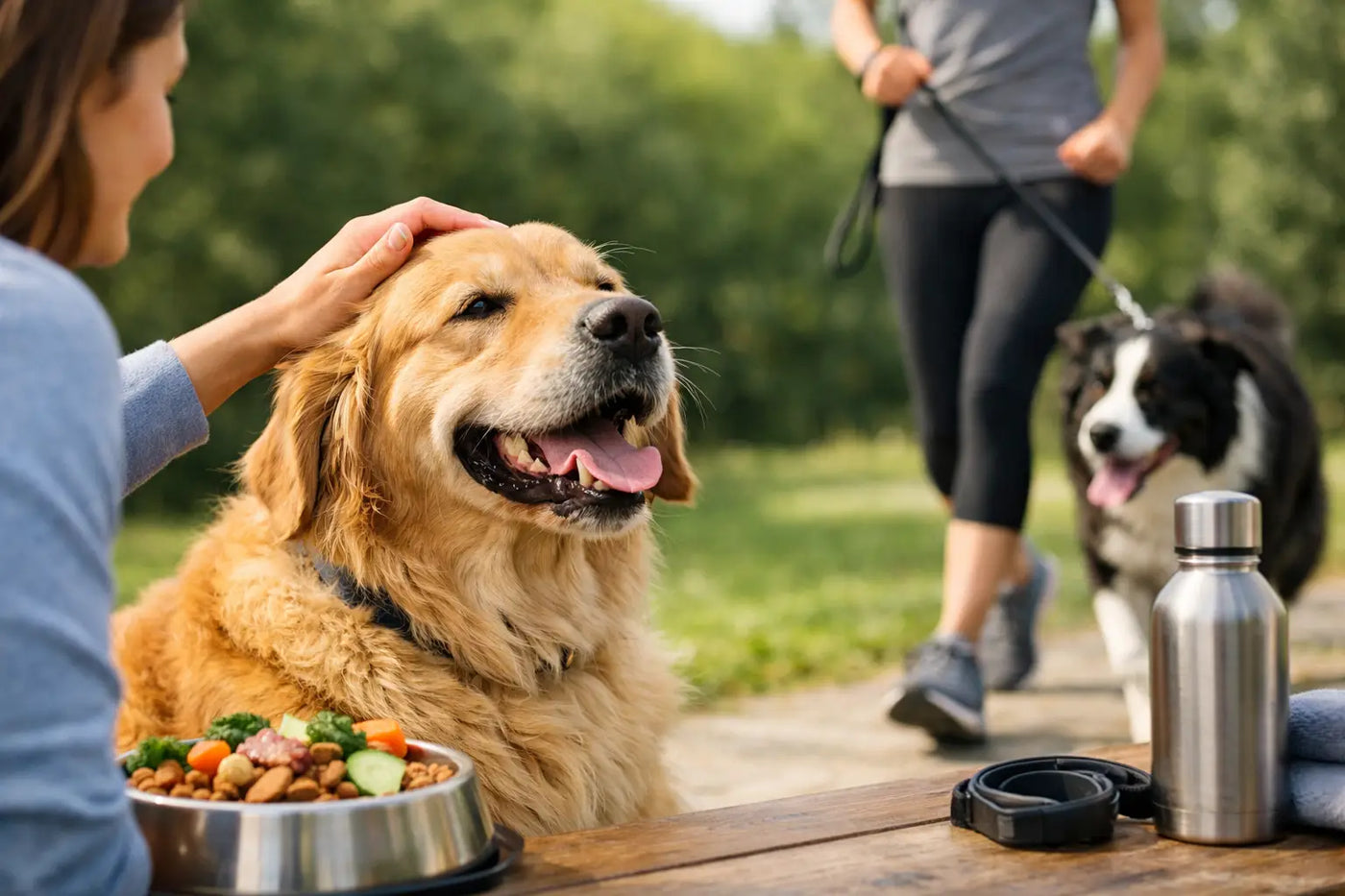
A happy dog is often seen in the small moments: an eager nose at the door, a deep nap after a walk, or a tail that starts wagging when the leash is brought out. Dog health is rarely about one single perfect product or a strict routine. It is shaped by the many thoughtful choices of everyday life—from the food bowl in the morning to resting after the day's final round.
For those of us who see our dog as an obvious family member, health also becomes part of life together. There should be room for forest paths, muddy paws, quiet evenings, and sensible care. Here are the habits that can help your dog feel good, feel safe, and join you on more of your shared adventures.
Dog health starts with seeing the whole dog
It is easy to focus on what is clearly visible, such as the coat, weight, or energy level on a walk. But the dog's well-being is larger than that. Appetite, sleep, mood, digestion, movement patterns, and the desire to participate are all small puzzle pieces that tell you something about how the dog is doing.
No one knows your dog as well as you do. Therefore, it is wise to notice changes, even the subtle ones. A dog that usually jumps into the car but suddenly hesitates, or one that has always loved its dinner but leaves food several days in a row, deserves a little extra attention. It doesn't have to mean that something is serious, but changes are worth taking seriously.
In case of anxiety, pain, long-term stomach issues, or sudden behavioral changes, the veterinarian is always the right next step. Everyday routines can support health, but they do not replace professional care when the dog needs it.
Food that suits your particular dog
Feed is an important part of the dog's everyday life, but there is no one-size-fits-all bag. Puppy, adult dog, and senior have different needs. An active dog that joins in on long trips might need something different than a smaller companion dog with a calmer pace. Even size, sensitive stomach, allergies, and neutering can affect what works best.
The most helpful thing is often to choose a quality feed with a clear list of ingredients and then monitor how the dog actually feels. Is the energy level even? Is the digestion working? Does the dog maintain a healthy weight? The coat and skin can also provide clues, but should always be assessed together with the whole picture.
Treats have their place—especially when you are training, going on an outing, or just want to celebrate a nice moment. But many small pieces quickly become a large part of the day's energy intake. Adjust the amount of food according to the rewards, and preferably choose smaller, soft training bits when many are consumed. That way, you can be generous with praise without losing the balance.
Fresh water should always be close at hand, at home and on the go. On hot days or during longer walks, your own water bottle and a collapsible bowl are small details that can make a big difference.
Keep track of body condition
A healthy weight is not about appearance but about stamina, joints, and quality of life. You should usually be able to feel the dog's ribs with a light pressure, without them sticking out clearly. The waist should also be discernible from above. If you are unsure, a veterinarian or animal health professional can help you assess the condition and set a reasonable plan.
Rapid changes are rarely the best path. If the dog needs to gain or lose weight, small adjustments and regular follow-ups are usually kinder for both the body and everyday life.
Movement for the body and the nose
The walk is so much more than a toilet break. It is the dog's chance to move around, read scents, train its curiosity, and get a break from home routines. For many dogs, sniffing is at least as valuable as the number of steps.
How much exercise is needed depends on the dog's age, breed, personality, and health. A young dog with lots of energy may love longer trips and play, while an older dog might be best served by several shorter, calm walks. The important thing is not to compare yourself with other owners, but to find a level where your dog feels satisfied and recovered.
Feel free to vary the route sometimes. A new park, a path in the forest, or a calm walk near water can provide new impressions without you having to plan a huge adventure. If you have a dog that easily gets worked up, a slower pace with plenty of sniff breaks might be better than intense ball throwing.
Also consider the surface and the weather. Hot asphalt can damage paws, icy sidewalks can be difficult for older dogs, and forest trips may require checking the coat and paws afterwards. During the summer, morning and evening are often most pleasant. When it is cold, a dog with a thin coat, short legs, or high age may need an extra layer to enjoy being outside for longer.
Rest is an active part of well-being
A dog that joins in on everything may look happy, but even social and adventurous dogs need undisturbed recovery. Puppies and young dogs sleep a lot in particular, but adult dogs also benefit from quiet moments without demands for activity.
Create a personal space where the dog can be left alone. It can be a bed in a quiet corner, a blanket near the family, or a secure crate used as a resting place with an open door. Children and guests also need to know that a resting dog should not be disturbed.
Stress can look different. Some dogs become restless and barky, others become quiet, clingy, or have trouble settling down. If everyday life has been extra eventful, the next day can be a simpler one. A calm sniffing walk and a long rest might be exactly what the dog needs.
Coat, paws, teeth, and small routines
Preventive care becomes much easier when it is allowed to be a natural part of the week. A quick paw check after the walk can catch small wounds, gravel between the pads, or ticks before they have time to cause problems. Regular brushing helps you discover mats, irritations, and changes in the skin, while many dogs appreciate the quiet time together.
Dental health also deserves a place in the routine. Bad breath is not just a minor everyday detail—it can be a sign that the mouth needs to be checked. Toothbrushing with products adapted for dogs is often the most effective at home, while chew products can work as a supplement depending on the dog's needs and chewing style.
When choosing everyday products, it can be smart to think function before trend. A comfortable harness, a leash that suits your walks, a soft bed, and products for coat and paw care can make life easier for both human and dog. At Labbetass, the idea is just to make it easier to find inspiration for dog life, without you having to search everywhere yourself.
Mental stimulation gives a more satisfied dog
Many dogs get tired in a wonderful way from using their brain. You don't need to build an advanced obstacle course in the living room. Hiding a few pieces of food in a towel, letting the dog search for treats in the grass, or practicing a couple of simple signals for five minutes can go a long way.
Adjust the task so that the dog can succeed. A cautious or easily stressed dog often needs simple exercises in a calm environment, while a confident, eager-to-work dog can appreciate more variety. If the play creates frustration instead of joy, make it simpler or shorter next time.
Training also builds relationships. When you reward what you want to see more of—contact, calm, obedience, or courage—everyday life often becomes smoother. Kind methods, clarity, and patience take you further than harsh handling.
A healthy dog life can be real
There are days when the walk is shorter, the coat doesn't get brushed, and dinner is served a little later than planned. That doesn't make you a worse dog owner. Dog health is about direction over time, not that every day has to look perfect.
Start where you are. Maybe there will be an extra sniffing round after work, fresh water in the car, a better resting place, or a regular check of the paws on Sundays. The small habits turn into safety, and safety gives you more time for the best part of dog life: just being together, outdoors and at home.