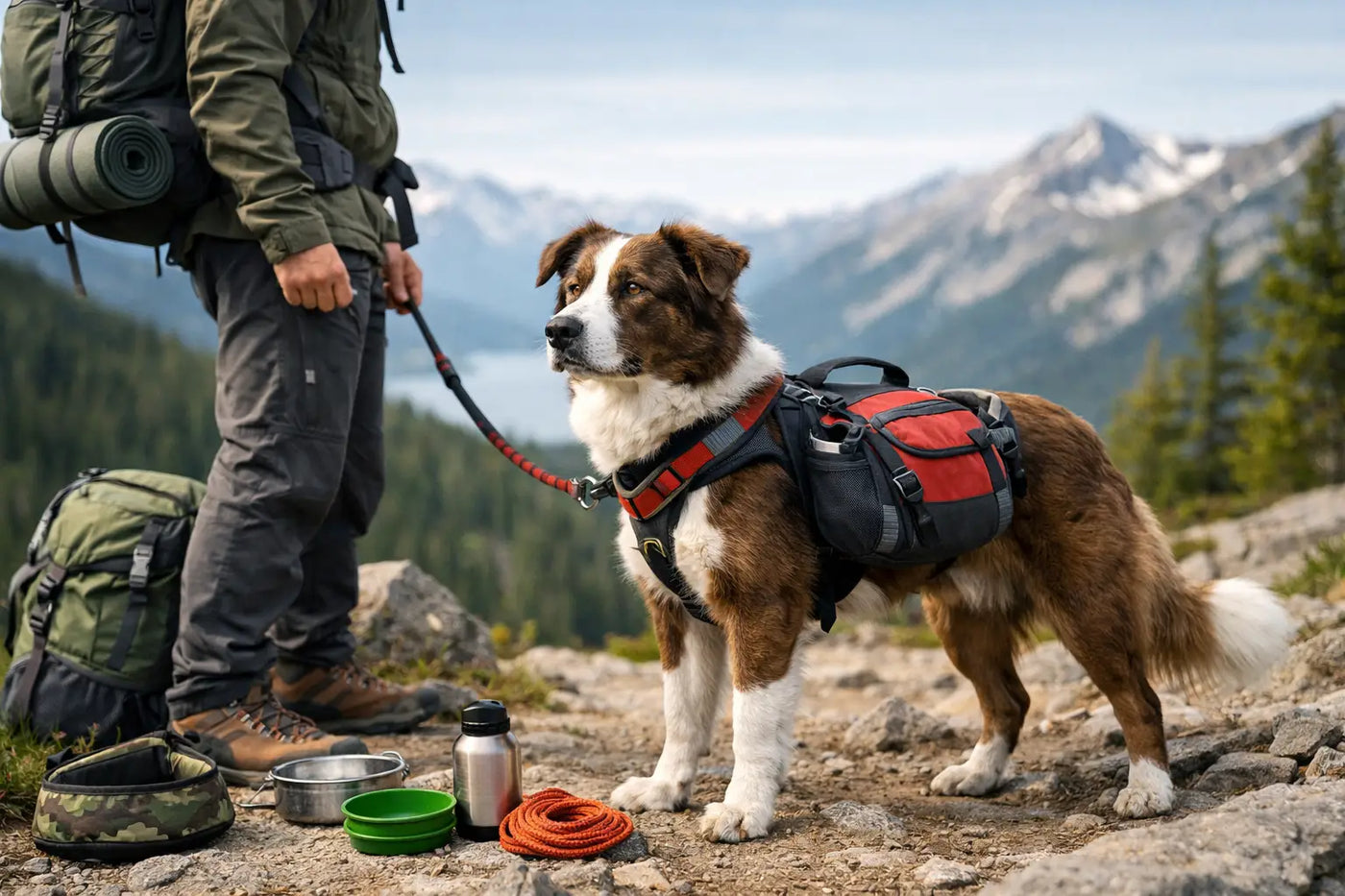
It is noticeable quite quickly when a dog doesn't have the right equipment for a hike. A harness that chafes, too little water, or sore paws can turn a wonderful trip into something you'd rather cut short. That is why a guide to hiking gear for dogs is not just practical – it makes the entire experience safer, calmer, and much more fun for both you and your four-legged friend.
What your dog actually needs on a hike
It is easy to buy what looks sporty and hope that everything will work out on the trail. But good hiking gear is less about gadgets for the sake of gadgets and more about matching the equipment to the dog's size, coat, energy, and the terrain you are walking in.
A short forest walk of a few hours doesn't require the same setup as a full day in the mountains or several nights out. A young dog that likes to bolt forward often needs a different harness than an older dog that walks more calmly. And a small dog may need extra warmth or more frequent breaks, while a large, strong dog often needs stable equipment that handles pulling and movement without sliding.
The smartest approach is to think in three parts - movement, hydration, and recovery. If those three work, you have already come a long way.
Guide to dog hiking gear - start with the harness
The harness is often the most important part of the dog's equipment. It should fit snugly without restricting the stride, and it should not chafe at the shoulders, armpits, or chest. Many people choose a model that looks sturdy, but it is the fit that determines if it actually works.
For hiking, it is often wise to choose a harness with good freedom of movement at the front and multiple adjustment points. If the dog walks in hilly terrain, jumps over rocks, or steps on uneven ground, the harness needs to follow the body without twisting. A harness that is too loose quickly becomes irritating, and one that is too tight can create pressure where the dog moves the most.
If you hike with a lead attached to a waist belt, it is also worth considering how the pressure is distributed when the dog pulls a little. Some dogs walk nicely at a normal pace, others put on power as soon as the path opens up. That is where the right harness makes a big difference in the long run.
Collar or harness?
For hiking, a harness is almost always the better choice. A collar can work for calm transit stretches or short stops, but for longer trips, a harness provides better control and more comfort. Especially in uneven terrain or if the dog becomes eager when seeing other people, animals, or water.
Leash, long line, and freedom with control
A regular short leash works fine in some situations, but on a hike, many people appreciate a longer lead or a leash with a bit more leeway. It gives the dog the opportunity to sniff, choose its footing, and move more naturally without you losing control.
At the same time, the choice depends heavily on the environment. On narrow trails, in nature reserves, or where you meet many others, a shorter and more easily controlled leash is often best. On more open trails, a longer lead can provide a more relaxed feeling for both of you. There is no perfect solution for every trip, and that is exactly why it pays to think based on where you are actually walking.
A comfortable handle and material that feels good even when it gets wet are small details that make a big difference after a few hours out.
Water, bowl, and energy at the right level
Dogs get hot quickly, even when it doesn't feel particularly warm to us. Therefore, water is a self-evident part of every guide to hiking gear for dogs. How much is needed varies with weather, pace, coat, and how accustomed the dog is to activity, but the rule of thumb is simple - always bring more than you think you will need.
A collapsible bowl or a water bottle with a built-in bowl makes breaks smoother. The important thing is that the dog actually drinks. Some dogs do it immediately, others need to be offered water several times before they understand that it is a break.
If you are going on longer trips, it is also wise to pack energy-rich treats or food in small portions. Many dogs get tired more than usual on a hike, even if they seem energetic at the moment. A short break with water and a little energy can do wonders for both mood and stamina.
Paws, terrain, and weather
The paws often have to work the hardest of all. Gravel, sharp rocks, hot ground, roots, snow, or wet patches wear them down more than you might think. Therefore, paw care and possibly paw protection is something more dog owners should consider before problems arise.
Not all dogs need shoes, and some do not accept them at all. But in rough terrain or for sensitive paws, they can be a real savior. For others, paw balm before and after the trip and checking the paws during breaks is sufficient.
It is also good to remember that wet weather places different demands than sunny days. A long-haired dog can carry a lot of moisture and dirt, and a cold-sensitive or older dog may need a light protective coat during rests or evening rest. There is no universal answer here - it is all about how your specific dog reacts.
Guide to dog hiking gear for longer trips
When trips become longer than a few hours, the needs change. Then it is no longer enough to just think about a harness and water. You need to look at the big picture.
Some dogs enjoy carrying their own dog pack, but it must be introduced carefully. The bag must sit stably, the weight must be distributed evenly, and the dog must be in full health and used to moving over longer distances. A small or young dog should not be burdened just because it seems practical. For the right dog, however, it can be a nice way to carry their own water, bowl, and a few small items.
For longer trips, it is also wise to pack a small first aid kit for the dog. It doesn't have to be advanced, but things like self-adhesive bandages, wound cleaner, a tick remover, and something to wipe off dirty paws can be very nice to have close at hand.
A light sleeping pad or a blanket for rest is also more valuable than many think. Dogs recover better when they get a dry, calm place to lie down, especially if the ground is cold or wet.
How to pack smart without overpacking
It is easy to want to bring everything. Especially when it comes to the dog. But too much luggage can make the trip more cluttered than it needs to be. Choose items that fulfill a clear function.
Start with the essentials - harness, leash, water, bowl, waste bags, and something small to eat. Then add according to the length of the trip and the weather. Is paw protection needed? An extra towel? A coat for breaks? First aid? When you build your gear based on actual needs, packing becomes both lighter and more useful.
This is often where a curated feeling helps most. You don't need twenty choices in every category. You need a few things that feel safe, comfortable, and easy to use outdoors.
Common mistakes that make hiking worse
The most common mistake is testing new equipment for the first time out on a long trip. Even a nice harness can fit incorrectly, and dog shoes that seem perfect at home can come off after ten minutes in the woods. Always try things at home or on a shorter walk first.
Another classic is underestimating breaks. Many dogs walk on pure enthusiasm and don't show tiredness until they are already too worn out. Planned small stops with water, calm, and checking paws make a big difference.
It is also easy to think that an active dog always wants to go further. But desire and stamina are not the same thing. Adjust the pace to the day's form, the weather, and the terrain. The best trip is rarely the longest, but the one where the dog still feels happy, safe, and soft in the body when you are finished.
How to choose the right gear for your specific dog
If you are choosing between several options, think less about trends and more about the daily life around the trip. Is it easy to put on? Is it quick to adjust? Does the material withstand dirt and rain? Does it feel simple to use even when you are tired, cold, or have your hands full?
For many dog owners, it is that exact combination that determines what becomes their favorite gear – comfort for the dog and simplicity for the human. It doesn't have to be complicated to be really good.
Whether you are planning short weekend trips or longer adventures, the right equipment allows you to focus on the best of all – the sniffing, the breaks by the water, the happy look on the trail, and the feeling of being out together a little longer than usual.