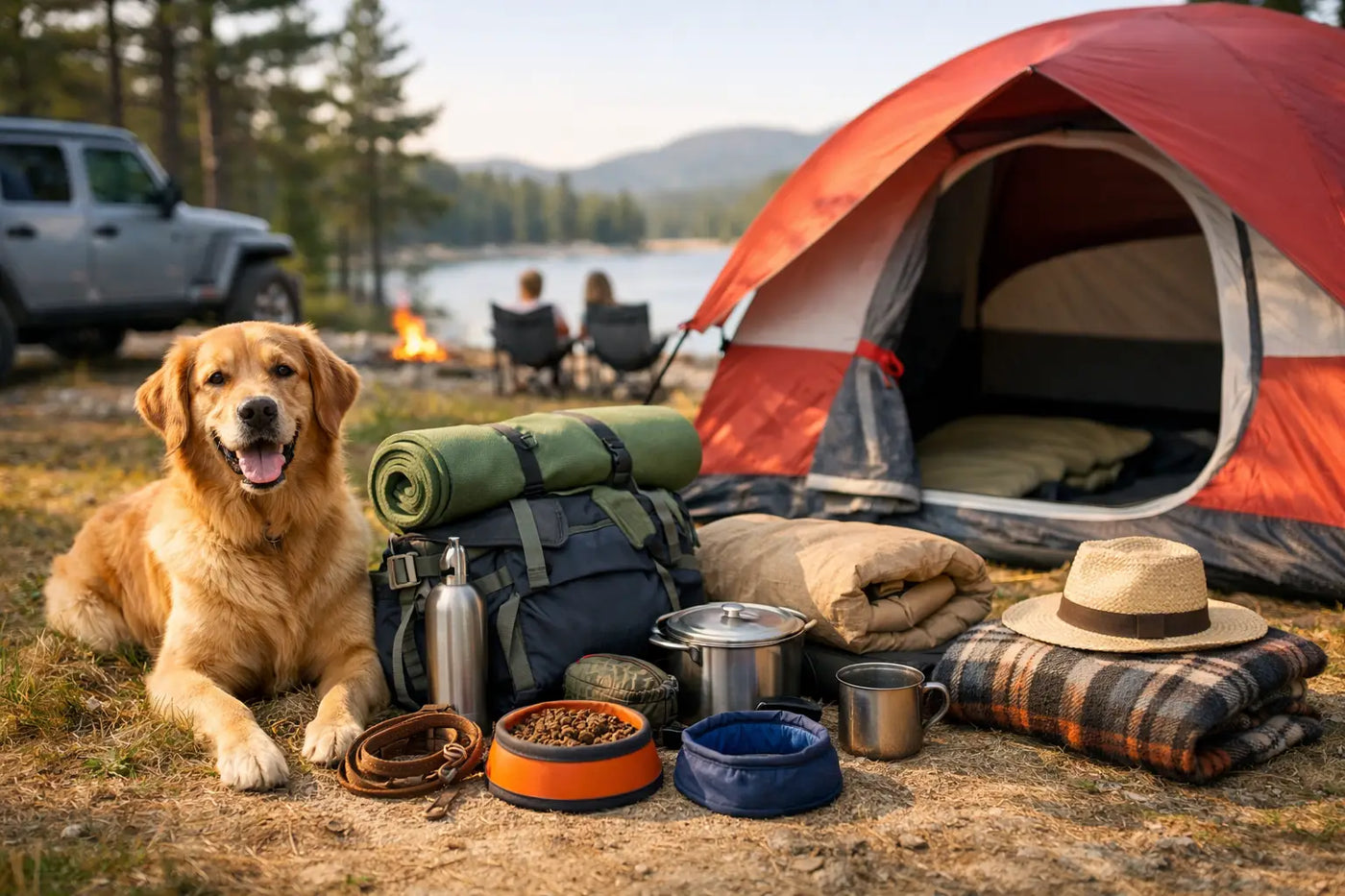
A successful camping morning often begins before the tent is even pitched: the dog gets to sniff the area in peace and quiet, the water bowl is out, and you know where the nearest shade is. This guide to dog-friendly camping is about exactly that - making outdoor life simple, safe, and wonderful for both two- and four-legged family members.
Camping with a dog doesn't have to be complicated, but it goes better when you plan based on the dog's needs rather than trying to solve everything on site. An active young dog, a senior with stiff joints, and a slightly stressed rescue dog all need different things. The goal is not a perfect vacation according to someone else's image, but days where your dog can relax, be close to you, and experience nature at its own pace.
Choose the right spot for dog-friendly camping
A campsite that welcomes dogs is not always the same as a place that works well for your specific dog. Start by considering what makes everyday life easy. Are there walking paths directly from the area? Is the swimming area near busy roads, crowded, or calm enough for the dog to join in? Are there shady spots for a tent or camper when the sun is blazing?
Read the campsite's rules before booking. Many have requirements for leashes throughout the area, restrictions on dogs in service buildings, and specific rules for swimming. This is reasonable - all guests should enjoy their stay - but you don't want to discover only upon arrival that the dog is not allowed to accompany you to the places you were looking forward to.
For a social and experienced dog, a larger family campsite can work excellently, especially if you appreciate proximity to activities and other people. If you have a dog that reacts to sounds, other dogs, or children passing closely, a smaller nature campsite, an RV site with proper distance, or a quiet campsite outside of high season might be a better choice. A little extra travel time can be worth a lot when the nights are quiet and the walks are relaxed.
Also, consider the surface. Hot asphalt, gravel that gets stuck in the paws, and open areas without shade can make a nice spot less comfortable in the middle of summer. Grass, woodland edges, and proximity to water are usually appreciated, but even there, you need to keep an eye on ticks, algal blooms, and local leash laws.
Pack for rest, movement, and unexpected weather
It is tempting to pack the dog's regular food bowl and favorite leash and then fill the rest of the car with blankets. But camping life places different demands than a weekend at home. The heat can change quickly, the ground is new, and the days contain more impressions than usual.
Start with things that create recognition. The dog's regular blanket, bed, or crate can become a clear resting place in the tent, awning, or motorhome. It signals that it is time to settle down, even when the neighbor puts up their awning or someone walks by with a rattling bicycle.
Bring enough of the dog's regular food for the whole trip, plus a little extra if you stay longer than planned. Changing food in the middle of a vacation is rarely a good idea, especially not when swimming, heat, and new routines may already affect the stomach. Fresh water should always be nearby, and a collapsible bowl makes breaks on a hike significantly easier.
Well-thought-out dog gear for camping often includes at least the following:
- a long leash or a tracking line for quiet moments at your own site
- harness, regular leash, and reflector or light for evening walks
- tick remover, first aid kit, and any medications
- towel, paw towel, and protection against rain or cold
- poop bags, cleaning wipes, and a small bag for dirty equipment
Create a safe base at the campsite
When you arrive, it is tempting to start cooking, swimming, or exploring the area immediately. Instead, give the dog a gentle start. Take a walk around the campsite, let it pee and finish sniffing, and then show it where your spot is. Set up water, rest, and shade before you unpack the rest.
The dog does not have to greet everyone. A friendly "no" to spontaneous petting is perfectly okay, and a clear blanket or bed can help other guests understand where the dog's private space begins. If your dog likes to guard, barks at movements, or has difficulty settling down, place the resting area as secluded as possible from the path.
Heat is often the biggest challenge. Dogs cool down less effectively than humans and can overheat faster than you might think, even on a cloudy day. Plan longer walks for the morning and evening, offer water often, and let the dog rest when the temperature rises. A cool towel, shade, and quiet moments can make a bigger difference than yet another activity.
Never leave the dog alone in a hot car, a stuffy tent, or a motorhome without safe ventilation and supervision. The temperature can rise quickly, and a dog that is usually confident at home can become stressed in an unfamiliar environment. If you want to do something where the dog cannot follow, it is better to take turns than to hope it goes well.
Nature experiences on the dog's terms
Camping is at its best when the dog is allowed to be part of the rhythm, not just following behind on the leash. Choose walks where it has time to sniff, stop, and investigate. For many dogs, a slow trail through the forest is more rewarding than a long and fast hike with many elevation gains.
By the water, you need to assess the place, not just the dog's swimming joy. Check if there are algal blooms, strong currents, sharp stones, or many boats. A life jacket is wise for dogs joining you on paddling, boating, or SUP trips, even if they are good swimmers. Fatigue and cold water can surprise even the most enthusiastic Labrador.
Also keep an eye on the wildlife. In some areas, special rules apply during periods when game has young, and in pastures, you must show extra consideration. A leash is not a failure for a dog that loves freedom - it is often what allows you to continue enjoying nature together without disturbing other animals or people.
When the weather changes plans
Rain can make the camping day nice in a different way. Dry the dog when you come inside, protect the bed from moisture, and find something quiet to do together under cover. A chew bone, a filled enrichment toy, or some simple scent exercises can give the brain work when the legs need rest.
Wind and thunder are more difficult for some dogs. If your dog is sound-sensitive, a motorhome, cabin, or more sheltered accommodation might be a better option than a tent. Bring things that usually soothe at home and avoid forcing a big excursion when the dog clearly needs security.
Consideration makes the trip better for everyone
What makes a campsite pleasant for dog owners is often the same thing that makes it pleasant for other guests: calm, clean areas, and thoughtfulness. Pick up immediately, do not leave the dog tied up unattended, and respect that not everyone wants to greet. A dog that barks at every passing rig needs support to wind down, not reprimands from a distance.
Feel free to plan short moments where the dog can rest while you sit still. It can feel like you are doing less, but those very moments are often the best of the vacation. Coffee outside the tent, a sleeping dog at your feet, and the forest starting to quiet down is a pretty good reminder of why you came.
At Labbetass, we believe that the right equipment should make it easier to get out, not take over the adventure. Choose things that fit your everyday life and your dog, whether you are camping with a backpack, a caravan, or just a blanket by a lake.
Next time you book, let the dog's needs be included from the first click. Then the camping won't just be dog-friendly on paper, but a place where the whole family can actually breathe out.