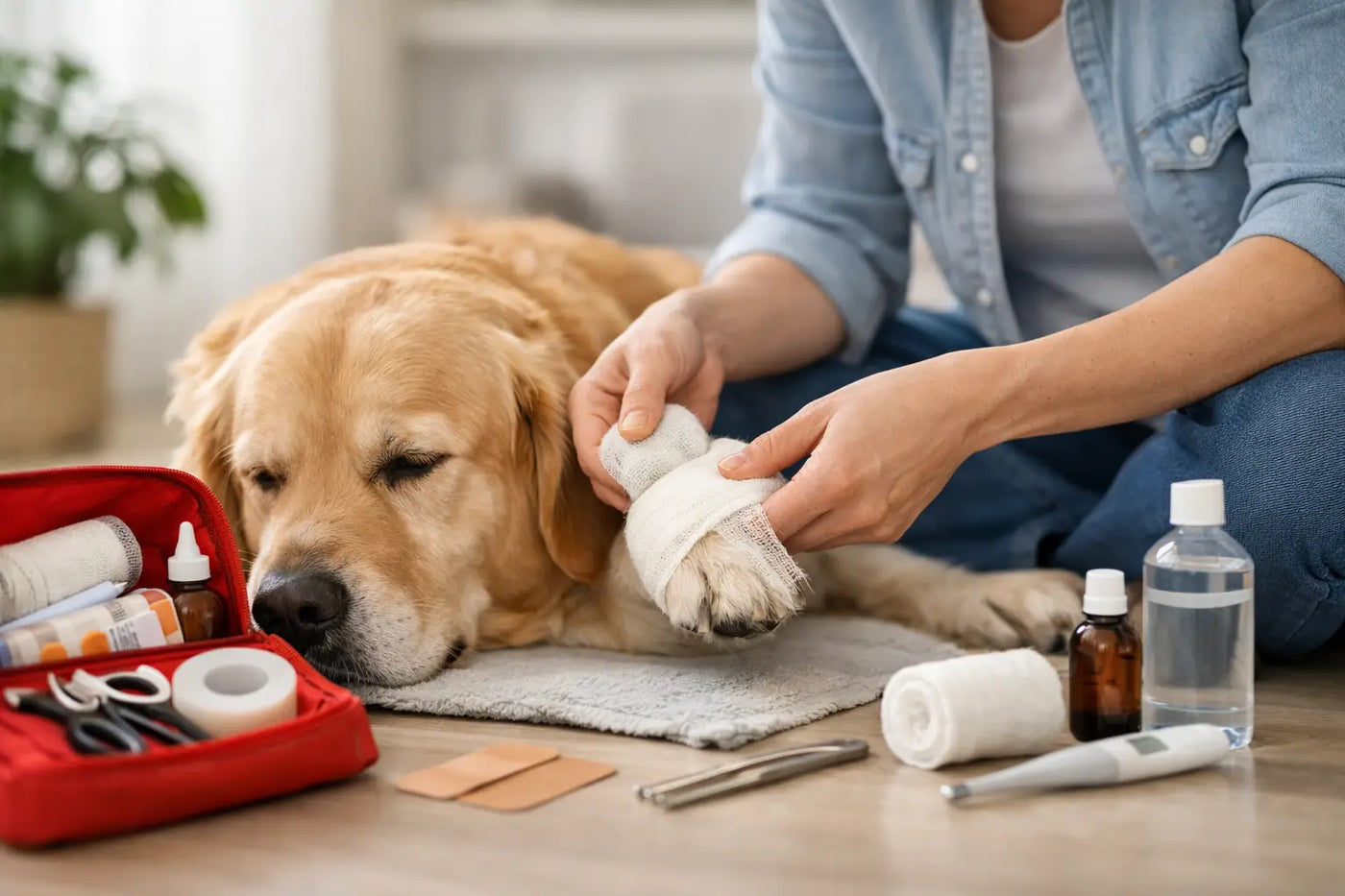
A Sunday excursion can go from delightful to stressful in seconds: a paw in glass, a dog that has overheated in the car, or a sudden limp on the trail. With a simple first aid guide for dogs at home and in your backpack, it becomes easier to stay calm until you get professional help. First aid never replaces veterinary care, but the right measures during the first few minutes can make a big difference.
Start with calm, safety, and a quick glance
A frightened or pained dog can bite, even if it is usually the world's kindest friend. Talk softly, keep other people and dogs at a distance, and avoid putting your face close to the dog's mouth. Feel free to ask another person to call the vet while you look at what happened.
Start by checking breathing. Look to see if the chest is moving, listen for air, and see if the dog is awake and responsive. Notice any bleeding, swelling, vomiting, unsteadiness, or clear signs of pain. You don't need to make a diagnosis on the spot – your task is to create safety, reduce the risk of the situation worsening, and give the vet a clear picture.
In case of heavy bleeding, difficulty breathing, unconsciousness, suspected poisoning, seizures, or severe pain, you should contact a veterinarian immediately. Do not wait to see if it passes. Call on your way to the clinic if you can, so the staff can prepare and guide you in the moment.
First aid for dogs for wounds and bleeding
Minor scrapes are common after playing in the woods, on rocks, and along gravel roads. Rinse gently with clean, lukewarm water or saline solution if you have it. Remove visible dirt around the wound without poking deep into it, and then protect the area with a clean compress.
If it bleeds more than a light trickle, press firmly with a compress or clean towel directly against the wound. Keep the pressure on for several minutes without lifting to check constantly – this can disturb the clot. If the material becomes soaked, place a new layer on top instead of removing the first one.
Wounds that are gaping, located near an eye or joint, have glass or other foreign objects in them, or continue to bleed need to be assessed by a veterinarian. Do not pull out objects that are stuck deep. Stabilize the area as best you can and head in. Licking often makes small wounds larger, so a collar or protection may be needed even after the bleeding has stopped.
When the dog limps or injures its paw
A dog that stops dead on a walk may have stepped on something sharp, cracked a claw, or strained itself during play. Inspect the paw in good light, even between the paw pads. Look for splinters, cracks, swelling, heat, and tenderness. If the dog clearly protests, take it as a signal not to continue the examination at home.
A small superficial injury can be cleaned and protected temporarily. Keep walks short and calm until you see how the dog is feeling. With an injured claw, it can bleed surprisingly much, and then direct pressure with a compress helps. A claw that is hanging loose, a paw that is swelling, or a limp that does not quickly subside should be checked by a veterinarian.
Do not try to straighten a leg, manipulate a joint, or apply a tight bandage if you suspect a fracture. Limit movement, help the dog into the car on a blanket if necessary, and keep it warm. A smaller dog can be carried with support under both the chest and hindquarters. For larger dogs, a sturdy blanket can serve as a stretcher with the help of two people.
Heatstroke requires rapid cooling
Hot days, stationary cars, and intense play can become dangerous quickly, especially for older dogs, flat-faced breeds, and dogs with thick coats. Heavy panting, dark red or very pale mucous membranes, unsteadiness, vomiting, restlessness, and collapse are warning signs.
Take the dog to the shade or a cool area immediately. Cool with cool, not ice-cold, water on the body, especially over the stomach, groin, and paws. Offer small amounts of water if the dog is awake and wants to drink, but never force fluids. An ice bath or ice-cold wraps can be a bad idea because the body can react by constricting blood vessels.
Contact a veterinarian immediately, even if the dog seems to perk up after cooling. Heatstroke can affect the organs later and needs to be taken seriously. When it is hot, the best first aid is often to stop the activity early, plan the walk for cooler hours, and always have water available.
Adder bites, wasp stings, and allergic reactions
In the Swedish countryside, adder bites are a reason to call a vet immediately. The bite is not always clearly visible, but sudden swelling, pain, fatigue, or a changed general condition after the dog has been sniffing in brush or rocky terrain should be taken seriously. Keep the dog as still as possible and carry it if possible. Do not let it run home, do not cut into the bite, and do not try to suck out the venom.
A wasp sting can cause local swelling and discomfort, but becomes acute if the dog develops swelling around the nose or throat, difficulty breathing, repeated vomiting, weakness, or collapse. Call a veterinarian as soon as possible with such symptoms. Do not give human medication on your own initiative – the correct dose and choice of medicine depends on the dog's size, health, and situation.
Suspected poisoning: bring the evidence
Chocolate, xylitol, nicotine products, medicines, certain plants, and chemicals can be dangerous even in small amounts. If you see or suspect that the dog has eaten something inappropriate, remove what is left and save the packaging. Photograph the ingredient list and try to estimate when and how much the dog has consumed.
Call the vet immediately for advice. Do not induce vomiting at home unless you have been explicitly instructed to do so. Some substances can damage the esophagus on the way up, and a drowsy dog risks getting vomit into the airways. The more concrete information you can provide, the faster the veterinarian can determine the next step.
Build a dog first aid kit that actually comes with you
A first aid kit doesn't need to be large, but it should be easy to find when needed. Keep one at home and a smaller one in the car or hiking backpack. Check the contents before the season's excursions, after use, and before long trips.
A practical kit contains:
- Saline solution and clean compresses for rinsing and wound protection.
- Self-adhesive bandage, regular gauze, and tape that doesn't stick directly to the fur.
- Tick remover, tweezers, and small scissors with rounded tips.
- Disposable gloves, a clean towel, and a blanket for warmth or transport.
- A collar or other secure anti-lick protection, plus contact information for the nearest veterinary clinic.
Make a plan before something happens
First aid feels significantly easier when you already know who to call. Save the number to your regular vet and the nearest emergency clinic on your phone. If you are often out on a trip, you can also note where there is cell service, water, and the nearest way back to the car.
It is wise to practice everyday handling when the dog is healthy: letting its paws be examined, standing still for simple paw bandaging, and resting with a blanket over it. Reward calm cooperation with something the dog appreciates. Then the handling will be less strange if you end up in a stressful situation.
Your dog doesn't need you to know everything. It needs you to notice the change, act without panic, and dare to ask for help in time. A well-stocked dog first aid kit, a charged phone, and a few calm minutes can give you both a safer way home from your next adventure.