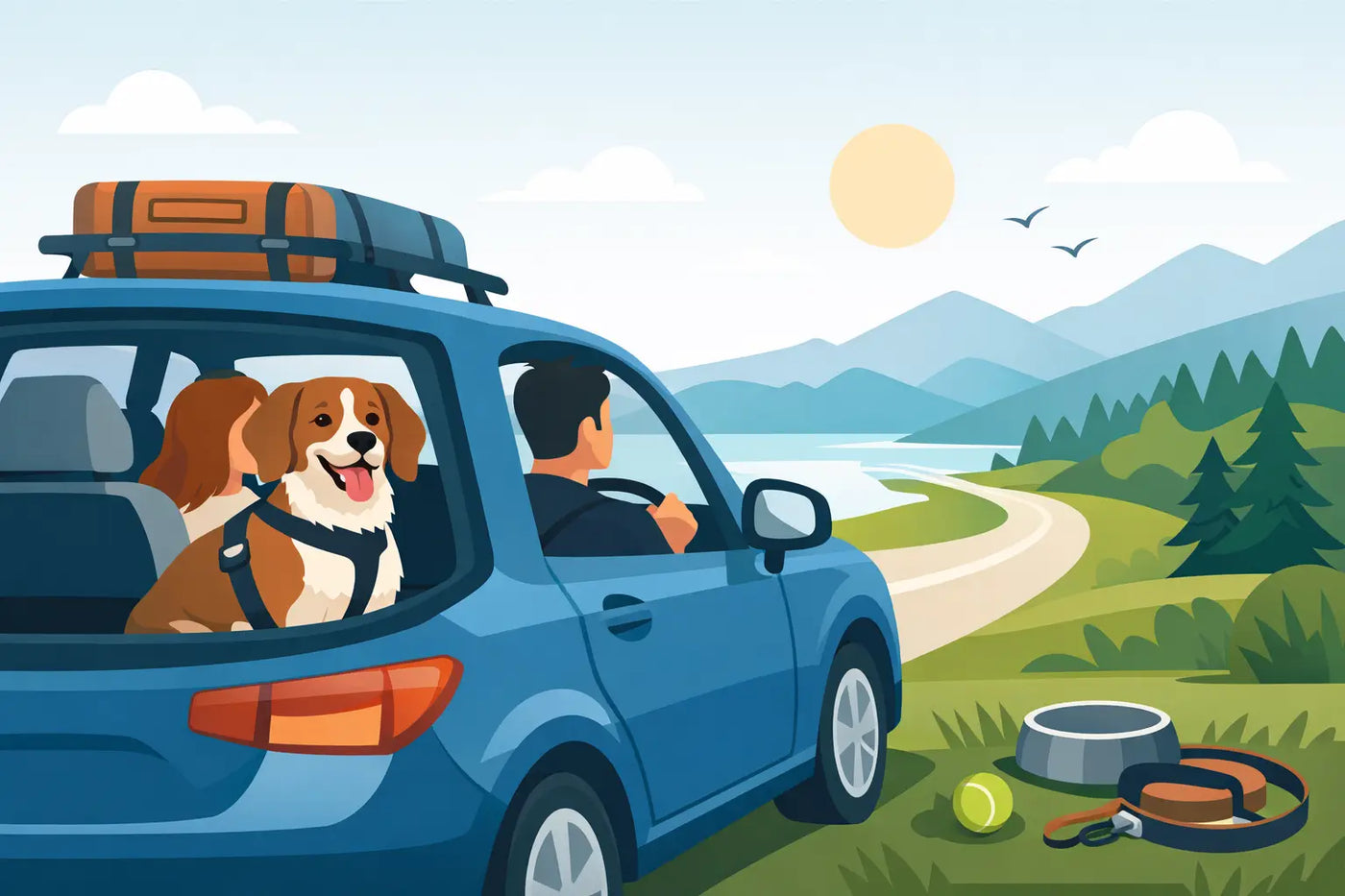
You can tell immediately when a dog is comfortable in a car – its gaze is curious, its body relaxed, and its tail starts wagging the moment the car door opens. But just as often, you see the opposite: panting, restlessness, whining, and a trip that feels longer for everyone in the car. A good guide to traveling by car with a dog is therefore not just about transportation. It is about making the outing safe, calm, and truly pleasant, both for the dog and for you.
For some dogs, car travel comes naturally. For others, it requires a bit of training, the right equipment, and a plan that suits their specific temperament. Puppy, senior, large dog, sensitive stomach, or lots of energy – it all matters. The better you adapt the trip, the less stress on the road.
Guide to traveling by car with a dog - start before you roll
The biggest mistake is often thinking that everything will sort itself out once the car starts moving. For many dogs, the experience begins much earlier. They react to the keys, to bags being packed, and to routines looking different. If your dog gets worked up at home, it is smart to start with calmer preparations.
Feel free to take a walk before departure so that the dog can move around, sniff, and relieve itself. A dog that has burned off some energy often gets into the car with better preconditions. This does not mean it needs to be completely exhausted, just more balanced.
Food is also a balancing act. Some dogs do best not eating shortly before the trip, especially if they are prone to motion sickness. Others become anxious or low in energy if they travel on an empty stomach. There is no exact right answer here. Experiment on shorter trips and see what works for your dog.
Practice car travel in small steps
If your dog is not used to the car, short sessions are almost always better than starting with a long trip. Sit in the car without driving. Give calm rewards. Start the engine and turn it off again. Drive around the block. Build up confidence gradually.
This is especially important for dogs that have previously had a bad experience, such as nausea or stressful trips. The goal is not for the dog to "endure" it. The goal is for it to feel that the car is a safe place.
Safety first - how the dog should travel in the car
There are few shortcuts here. The dog needs to be secured. A loose dog in the car is a risk both to itself and to everyone else in the vehicle. During heavy braking, even a small dog can become dangerous, and a larger dog can be seriously injured.
The most common solutions are a car harness, transport crate, or safety grille combined with a secure spot in the trunk. What fits best depends on the car model, the dog's size, and how often you travel. A car harness can work well for shorter trips if it fits well and is used correctly. A sturdy crate often provides more protection and can also create a calmer feeling for dogs that like a confined space.
The important thing is not to choose what seems easiest at the moment, but what actually works safely over time. A large dog in a crate that is too small quickly becomes uncomfortable. A harness that chafes or fits incorrectly is not a good solution either. Comfort and safety need to go hand in hand.
What usually makes a big difference
A non-slip blanket, a well-ventilated space, and something that smells like home can change the entire experience. Many dogs relax better when the surface is stable and familiar. If the dog slides in corners or has to brace itself for every little movement, the journey becomes more strenuous than necessary.
Also, think about the temperature. Cars get hot quickly, even when the weather feels mild. Good ventilation is important, but the dog should not sit in a draft for a long time either. The balance is simple in theory but requires some attention during the trip.
Pack smart for a calmer car trip
Well-thought-out packing does more than you might think. When the most important things are within reach, breaks become easier, and you avoid having to scramble for solutions in a parking lot.
Bring water, a bowl, waste bags, a leash, a towel, and something the dog recognizes, such as a blanket or favorite toy. For longer trips, it is wise to also bring extra food, wet wipes, and something to wipe off paws or fur if the weather changes.
If your dog chews to calm down, a safe chew or an activity-friendly toy can help, but that depends on the dog. Some find it calming, others get more worked up. The same applies here as with much else in this guide to car travel with a dog: get to know your specific dog's patterns before you head out on longer distances.
During the trip - rhythm beats perfection
It is easy to focus on the destination, but for the dog, the trip itself is the entire experience. Regular breaks make a big difference, especially on longer journeys. A short break to drink, sniff, and stretch its legs can prevent both anxiety and stiffness.
How often you should stop depends on the dog's age, habit, and daily condition. An adult dog that is comfortable in the car can often handle longer intervals than a puppy or an older dog. At the same time, there is no gain in pushing on if the dog becomes stressed. A little extra time on the road is often well invested.
When you stop, keep the routine simple. Go for a calm stroll, offer water, and let the dog settle before you continue. For some dogs, the break is best if it is quiet. For others, a few minutes of sniffing the grass helps more than anything else.
If the dog becomes anxious or motion sick
Anxiety in the car can manifest in different ways. A dog may whine, pant, change position constantly, or become very still. Motion sickness can be noticed through drooling, yawning, nausea, or vomiting. One does not necessarily mean the other, but they are sometimes linked.
If your dog seems unwell, it is wise to backtrack and make the trips shorter again. Sometimes it helps to change the placement in the car, improve airflow, or adjust the timing of food. If the problems are recurring, it may be worth talking to a veterinarian for advice tailored to the dog's needs.
Car travel with a dog in summer and winter
The season affects more than you might think. In summertime, heat is the biggest risk. Even a short time in a stationary car can become dangerous. Therefore, plan stops where the dog can come along outside, or where one person stays with the dog while the other runs errands.
In winter, it is more about cold, wetness, and the fact that the dog can get stiff if it lies still for a long time. A warm blanket and a dry surface go a long way. If you have been out in slush, it can be nice for the dog to be dried off before jumping back into the car.
The beauty of a little foresight is that small details often go a long way. A towel in the trunk or extra water in the summer feels simple at home, but can make a big difference out on the road.
When the goal is a weekend, not just transportation
Many car trips with a dog do not end at a gas station, but at a cabin, a hotel, a campsite, or a new hiking area. In those cases, the surrounding experience becomes almost as important as the car ride itself.
Think about what the dog encounters when you arrive. If it is immediately thrown into a new environment with new scents, people, and sounds, even a good car trip can lead to stress. Therefore, give the dog a gentle start. A short walk, some water, and a quiet moment on its blanket can be enough to make the transition feel much easier.
For those who enjoy everyday adventures, this is also part of the charm. The car trip becomes not just a stretch between A and B, but the beginning of something you do together. This is precisely where many find the joy in a more dog-friendly outdoor life.
Small habits that make the next trip better
The best car trips with a dog rarely look perfect on paper. They work because the owner knows their dog, adjusts according to its mood, and does not get locked into a single solution. Perhaps you need more breaks than others. Perhaps your dog travels best early in the morning. Perhaps a simple blanket is more important than any advanced gadget.
If you want to make it easy for yourself in the future, note what worked after each slightly longer trip. How long could the dog travel comfortably? When did it become restless? Did it eat as usual afterward? Those kinds of small observations quickly become more valuable than general advice.
And once you find your way, it shows. The dog hops in with more certainty, you feel calmer behind the wheel, and the whole outing begins on the right note. That is often where the best trips are born – not in big plans, but in thoughtful small habits that make both two- and four-legged travelers enjoy themselves more together.