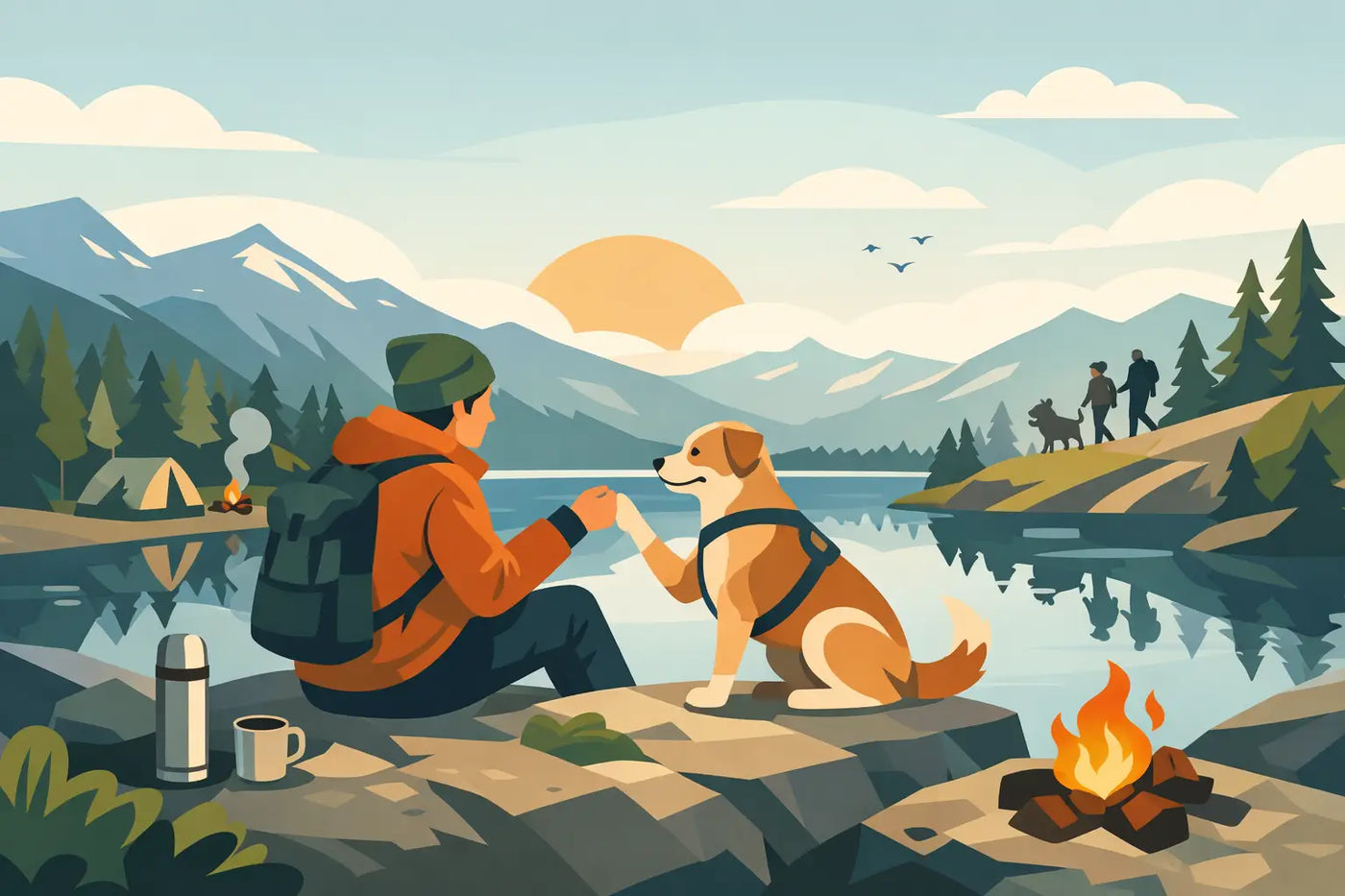
You can tell immediately when a dog is allowed to truly be out and about. Not just a quick walk around the block, but time in the forest, by the lake, or on a trail where the nose gets to work, the legs get to stretch out, and you are actually doing something together. Outdoor life with a dog is exactly about that – creating simple, fine habits where both human and dog feel better.
The beauty of it is that it doesn't have to be complicated. You don't need to plan a full day in the mountains to get that feeling of adventure. For many dogs, a quiet morning trip in nature, a picnic on a cliff, or a weekend excursion where they get to be a natural part of family life is plenty.
Why outdoor life with a dog works so well
Dogs are built for movement, curiosity, and presence. When they get to come along outside, something happens to the whole day. They often become calmer at home, more satisfied in their bodies, and clearer in their connection with their human. At the same time, we ourselves get a reason to get out, slow down, and be more in the moment.
This is also why so many dog owners enjoy this lifestyle. Outdoor life becomes less about achievement and more about companionship when a dog is along. The pace becomes more natural, the breaks feel obvious, and the small things become more fun – like finding a good trail, bringing coffee in a thermos, or seeing the dog happily bounding through the blueberry bushes.
But there is also an important nuance here. Not all dogs love the same kind of adventure. A young, energetic dog might want to walk far and a lot, while an older dog prefers shorter trips with more stops. Outdoor life with a dog is best when the plan suits the individual, not when you try to force a certain image of what an excursion "should" look like.
Start simple and build the habit
The most common mistake is to make it too big from the start. A dog that is not used to the forest, gear, car rides, or new environments can get tired in the wrong way if the first trip is too long. Better to start with short excursions where you have time to get a good feeling together.
Choose a place where it is easy to take breaks and where the surface feels kind to the paws. Let the dog sniff a lot. It is easy to think that exercise is only about kilometers, but nose work is at least as valuable. A fairly short trip with many scents can be more rewarding than a long, stressful walk at a high tempo.
Once the routine is established, you can add more. Perhaps a longer weekend trip, a hike with a lunch break, or an evening by the water. The important thing is that the dog associates the excursion with safety, calm, and something positive.
The right equipment makes a big difference
Not much is needed, but a few things make outdoor life both easier and more pleasant. A comfortable harness is often better than a collar when you are walking further or in uneven terrain. For some dogs, a longer leash works best, especially where freedom under responsibility needs to be balanced with safety.
Water is always worth planning for. Many forget how quickly a dog gets hot, especially during spring and summer when the sun feels mild to us but significantly stronger to a dog in a coat. A collapsible water bowl takes up almost no space and makes it easier to take breaks in time.
A small towel, poop bags, something simple to eat, and a seat pad or a blanket can also make a big difference. If you are often out when it is cold, wet, or windy, a coat after activity can be nice for some dogs, especially smaller breeds, short-haired dogs, and older individuals. This is where smart, well-thought-out equipment really shows – not because it should feel trendy, but because the day becomes smoother for everyone.
Read your dog, not just the weather
We humans often look at the temperature and think it looks nice. But for the dog, the surface, moisture, wind, heat, and how long you have been out play at least as big a role. A sandy path on a hot day can be heavy to walk on. Ice, crusty snow, or sharp stones can quickly make paws sore. Long trips in the rain can cool them down more than you might think.
That is why it is wise to keep an eye on small signals. Is the dog walking slower than usual? Does it seek shade often? Is it licking its paws, slipping, hesitating, or stopping more than normal? Such things are worth taking seriously immediately, before a cozy excursion becomes a difficult experience.
The same applies mentally. Some dogs love people, strollers, cyclists, and meetings on narrow trails. Others need more distance and calm to relax. In that case, a less-trafficked forest road is often a better choice than the most popular trail. There is no prestige in choosing simpler environments – on the contrary, it shows that you know your dog well.
Food, rest, and breaks out in nature
A successful trip is often more about rhythm than about length. Dogs do well to alternate activity with rest, especially if you are out longer than usual. Include small stops where the dog can drink, settle down, and just be. Often, this also becomes the best part of the trip for us humans.
If you are going to be out for a long time, it can be wise to bring a little extra energy, especially for active dogs. At the same time, it is good to avoid large meals just before intense activity. It depends a bit on the dog's size, sensitive stomach, and how intense the day will be. For some, a small snack after a while of rest works best.
Many dog owners also notice that rest does not always come by itself in new environments. A dog that is happy and excited can keep going longer than it actually has the energy for. Then it helps to create the break actively – sit down, take out water, let the dog lie on the blanket, and give the body a chance to catch up.
Outdoor life with a dog all year round
It is easy to associate excursions with summer, but many of the best moments come during the rest of the year. Autumn often offers cool air, soft trails, and fewer people out. Winter can be fantastic for dogs that like cold and snow, as long as you keep an eye on paws, temperature, and how long you stay out.
Spring is a bit trickier than it looks. The ground can be wet, watercourses cold, and energy levels high after a long winter. Then it is smart to return to shorter trips first and build up both fitness and the toughness of the paws again. Summer requires the most planning around heat. Early mornings and late evenings are often kinder than the middle of the day, and shade is your best friend.
The beauty of thinking year-round is that you don't have to wait for perfect conditions. Half an hour out on a chilly weekday can provide just as much as a big excursion. It is the habit that makes the difference.
Make room for both adventure and comfort
There is an image that outdoor life must be stripped down to count. But for most families, it becomes more sustainable when it is also allowed to be comfortable. Bring what makes it possible for you to actually head out again. A good thermos, dry clothes in the car, a soft blanket for the dog, or a simple kit that is always ready at home can be what determines if the excursion feels easy or complicated.
That is exactly where a more curated lifestyle fits well. You don't need to search in ten different stores to find what works for dog life and everyday life outdoors. At Labbetass, that feeling is central – smart choices that make it easier to say yes to more moments outside, without making the whole project bigger than it needs to be.
When things don't go as you planned
Not all trips become perfect, and that is completely okay. Sometimes it rains more than the weather app promised. Sometimes the dog gets tired after twenty minutes, even though you planned a half-day. Sometimes you meet too many people, forget the water in the car, or realize that the place didn't suit you at all that day.
That doesn't mean you failed. It just means you are getting to know each other better. Next time, you will know more about what your dog likes, how long it has the energy for, what surfaces work, and what should be in the pack. That knowledge is worth much more than a perfect picture of the excursion.
Outdoor life with a dog is at its best when it feels warm, simple, and possible to do again. Therefore, do not choose the most impressive plan. Choose the trip that makes you both long to go out again the very next day.