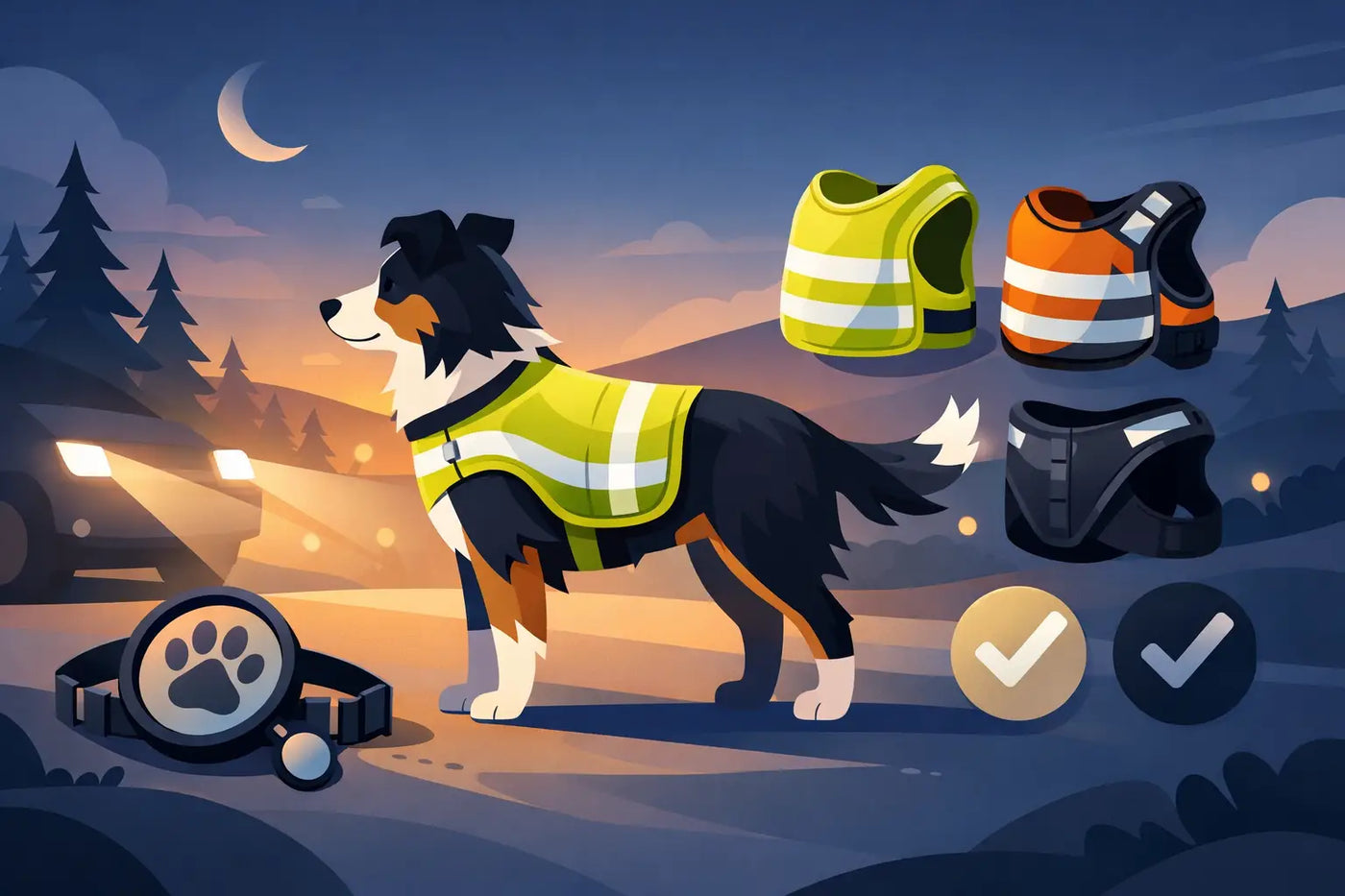
Dark mornings, late evening rounds, and a dog that loves to sniff its way toward the roadside—that's when you quickly notice if you've chosen the right gear. If you are looking for the best reflective vest for your dog, it's not just about being seen, but about making every walk safer without interfering with the dog's movement, warmth, or mood.
What makes a dog reflective vest truly great?
A good reflective vest should feel almost natural on the dog. It should be easy to put on, stay in place when the dog walks, runs, and stops, while providing clear visibility from several angles. It sounds simple, but the difference between a vest that is used every day and one that just lies in the hallway often lies in the small details.
The first thing many look at is the reflective surface, and that is, of course, important. But a large reflective surface doesn't help much if the vest slides to the side or if the material rustles so much that the dog dislikes it. For an everyday walk in a residential area, a simple model might be enough, while forest walks, rainy evenings, and areas with car traffic place higher demands on both fit and visibility.
The best choice is therefore rarely the most advanced model on paper. It is the one that fits your dog's body, temperament, and your usual routes.
The best reflective vest for dogs starts with the fit
If the vest fits poorly, it will either chafe, twist, or restrict the dog's movement. None of those things are particularly charming when you just want to get out quickly before work. A vest should follow the body without being tight over the shoulders, and it shouldn't press on the chest when the dog pulls slightly on the leash.
Small dogs often need lighter materials and easier fastenings. On a small body, a bulky vest can feel excessive and uncomfortable. Larger dogs, especially those with deep chests, instead need a model that truly covers without sliding backward.
The coat also plays a role. A smooth-haired dog might need a softer interior to avoid chafing, while a long-haired dog needs a vest that doesn't get stuck in the fur or become too warm. If you have a dog that is between two sizes, it is often smart to prioritize adjustability over an exact size number.
Signs that the vest fits correctly
When the dog can move naturally, lower its head to sniff, and trot without the vest twisting, you are close to the right choice. If, on the other hand, the vest slides to the side, bunches up over the back, or needs to be adjusted several times during the same walk, the fit is wrong even if the size looks correct on the label.
It is also worth looking at how the vest works together with a harness. Many dogs wear a harness year-round, and in that case, the reflective vest needs to work with it, not against it. Sometimes a simpler vest is best, sometimes a model with openings or a shorter cut works better.
Visibility is about more than just reflectors
When looking for the best reflective vest for a dog, it's easy to get fixated on silver-colored sections. But good visibility is a combination of reflection, color, and placement. Bright colors like yellow, orange, or neon make the dog more visible in twilight, fog, and rain, even before car headlights hit the reflectors.
The placement is just as important. The reflectors should be visible from the side, but also from the front and back so that the dog is detected in motion. For an active dog that likes to run a bit in front of or behind you, it helps if the vest catches the light from several angles.
There is also a clear difference between the city and the countryside. In urban environments, where there is already street lighting, color and contrast can be as important as strong reflection. On dark country roads or around forest edges, the quality of the reflector often becomes more decisive.
Materials that work in real weather
It's easy to like a vest indoors and then get tired of it after the first windy walk in November. The material needs to withstand the weather you actually walk in. For many dog owners, that means moisture, mud, slush, and a wash every now and then.
A light material works fine for dry evening walks but can feel too thin if the dog moves through wet grass or if the vest quickly becomes cold and heavy from rain. At the same time, an overly heavy-duty model is not always better. If it becomes hot, stiff, or slow to dry, it is often used less in everyday life.
The best approach is to think practically. If you need something for autumn and winter, choose a reflective vest that dries quickly and is easy to rinse off. If you have a dog that loves to roll around or run in bushes, durability is more important than an extra-stylish fabric.
An everyday vest or a more durable model?
If you mostly go for short rounds in lit neighborhoods, a light and flexible vest is often enough. For dogs that accompany you on longer trips, evening hikes, or walks near the road, it can be wise to choose a model with more coverage and better stability.
There is no single right answer here. The best vest for a calm couch-potato dog in a residential area is not necessarily the same as for an energetic adventurer who accompanies you out into the forest and wind several evenings a week.
Comfort determines if the vest actually gets used
This is perhaps the most underestimated part. A reflective vest only helps if the dog actually wears it, and if you as a dog owner have the energy to bring it out every time. Therefore, simplicity is a huge plus.
Velcro is quick and smooth, but can collect fur and lose its grip over time. Buckles are often more secure, but can take a little longer to adjust. For some dogs, it doesn't matter, but for an impatient individual who wants to get out immediately, a few extra seconds make a big difference in the hallway.
Comfort is also about sound and feel. Some dogs react strongly to rustling materials or seams that are felt over the back. If you have a sensitive dog, it is wise to choose something soft, flexible, and light. The best buying experience is, after all, when the vest just becomes a natural part of the routine.
When cheaper alternatives are enough - and when they are not
It is definitely possible to find affordable reflective vests that serve their purpose. For shorter walks in simpler environments, a basic model can be fully sufficient. If it fits well, is clearly visible, and lasts for normal use, you don't need to overpay just because the packaging sounds advanced.
But there are times when it's worth choosing better quality. If you use the vest every day during dark months, if your dog is very active, or if you move near traffic, durability and stable fit quickly become more than a detail. That's when a cheap model can feel cheap in the ways you least want to notice—poorer reflection after washing, loose fastenings, or materials that twist.
A wise rule of thumb is to think about the cost per use. What is used often and works without hassle almost always becomes the better purchase in the long run.
How to think about the best reflective vest for your everyday life
Start with the walks you actually take, not the ones you wish you took. Is it mostly evening rounds in the neighborhood, early mornings at the edge of the forest, or weekend trips to the countryside? That question makes the choice much easier.
If you have a dog that dislikes clothes, choose a light and discreet model. If you have a dark dog with a lot of fur, prioritize strong color and clear reflective sections. If you often move where cars pass by, choose a stable fit before anything else. And if you already use a harness every day, check that the vest works together with it without everything feeling awkward.
This is exactly where a warmer, more thoughtful dog life begins—in small choices that make everyday life smoother and safer. At Labbetass, that type of smart, thoughtful recommendation is the whole point: things that actually fit life with a dog, not just look good in a product image.
Common mistakes when choosing a reflective vest
A common mistake is buying a vest that is too big so the dog has "room to move." The result is often that the vest slides around and is less visible. Another is only looking at the back measurement and forgetting the chest and shoulders, which means the vest fits well when the dog is standing still but poorly when in motion.
Many also choose based on appearance instead of usage. That is understandable—you want your dog to be both pretty and well-equipped. But in this particular case, function almost always wins. A vest that is slightly less elegant but easy to use every day is a better purchase than a stylish model that feels complicated.
The last mistake is not trying it on at home in a calm environment. Let the dog wear the vest for short periods first. Then you will quickly notice if anything chafes, slides, or disturbs before you are out in the dark and cold.
When it comes down to it, the best reflective vest for a dog is the one that lets you let go of a little bit of worry when you go out. It sits where it should, the dog moves as usual, and you can focus on what actually matters most—that safe walk together, regardless of whether the sky is pitch black or just a little bit of November gray.