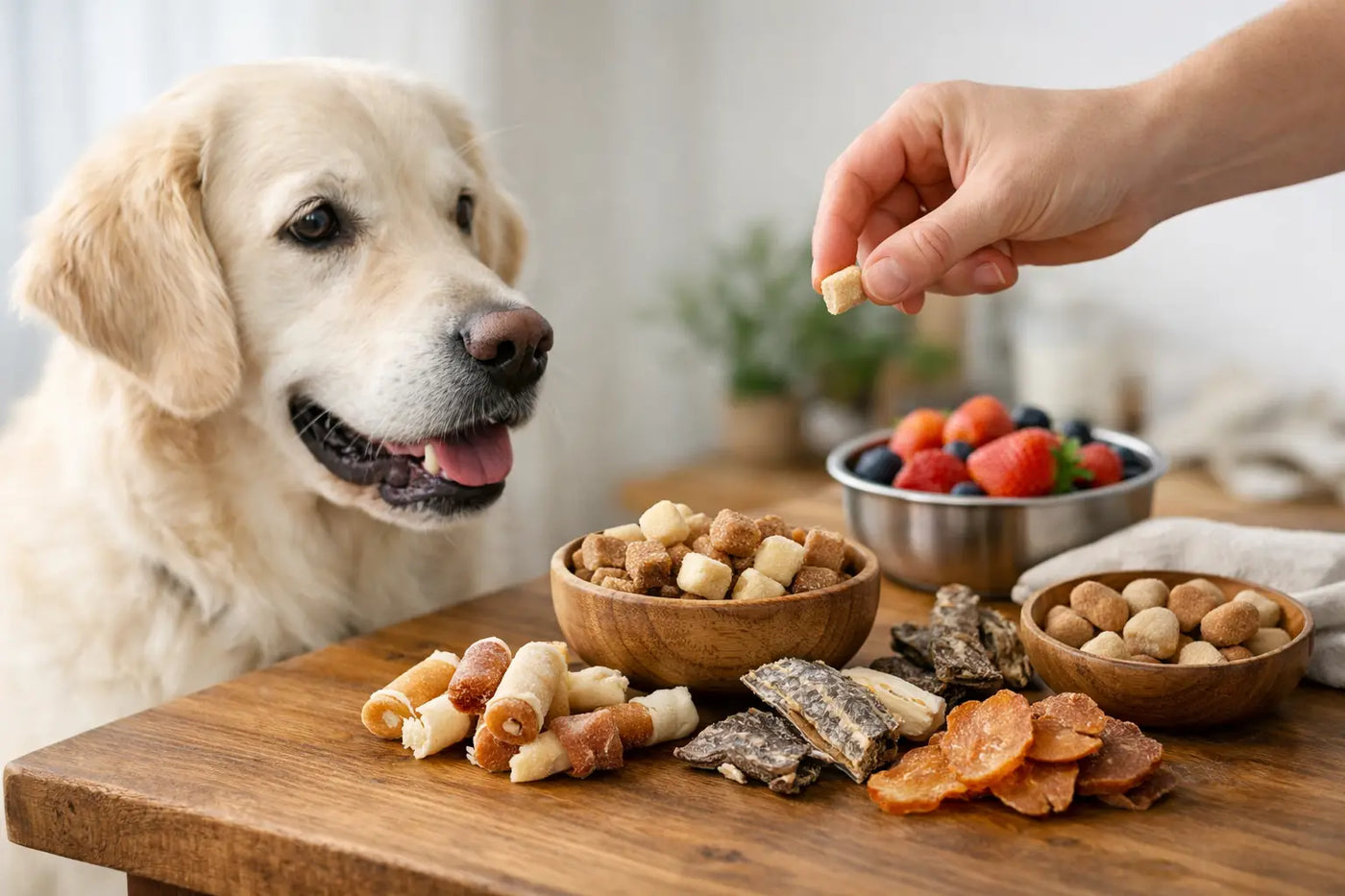
A little treat after a successful recall, during nail trimming, or in the middle of a forest walk should feel wonderful - not be followed by itchy skin, a gassy stomach, or loose stools. When looking for the best treats for sensitive dogs, the goal is therefore simple: a reward that the dog loves and the body tolerates.
Sensitivity can manifest in different ways. Some dogs react primarily in the stomach, others suffer from recurring itching or irritated ears. Sometimes it is a matter of a specific protein, other times it is about the quantity of treats or ingredients that are unnecessarily complicated. With a few thoughtful choices, reward time becomes easier for both you and your four-legged family member.
What is meant by a sensitive dog?
A sensitive dog does not have to have a diagnosed allergy. It may simply feel better on a simpler diet with fewer ingredients. Signs such as recurring soft stools, vomiting, excessive gas, paw licking, redness, or itching can be worth keeping an eye on - especially if they occur after new snacks.
At the same time, it is easy to draw conclusions too quickly. An upset stomach after a full day of training treats does not always mean the dog is reacting to that specific protein. The treats might have been too fatty, the portions too large, or the introduction too fast. Therefore, look for patterns over a few weeks instead of changing everything at once.
For severe, long-term, or recurring problems, the vet is the right next step. If the dog is being investigated for food allergies, treats must also fit the plan recommended by the vet. Even a small piece of the wrong ingredient can make it harder to understand what the dog is actually reacting to.
The best treats for sensitive dogs often have a short ingredient list
Turn the bag over before you buy. A treat with a clear primary ingredient is often easier to evaluate than a long list of ingredients where several types of meat, grains, flavorings, and binders are mixed. This does not mean that every product with more ingredients is bad, but for a sensitive dog, it is wise to start as simply as possible.
A single-protein treat usually contains one main animal protein source, such as lamb, rabbit, game, fish, or insect. Which protein works best depends entirely on the dog. Chicken is appreciated by many dogs but is not necessarily right for one that has previously reacted to poultry protein. Fish might suit one dog well, while the higher fat content may be too much for another.
Freeze-dried or gently dried single-ingredient treats can be a convenient choice when you want to test tolerance. These could be, for example, pure small pieces of a protein the dog already does well with. Soft training bits can, in turn, be more practical for reward-based training, but check the contents extra carefully as they often have more components for texture and flavor.
Ingredients that may be worth limiting
There are no universal scapegoats, and many dogs handle regular treats without any problems. For a dog with a sensitive stomach or suspected food reaction, it may still be wise to be careful with:
- several different animal proteins in the same product
- high fat content, especially if the dog easily gets loose stools
- sugar, syrup, and unnecessary flavor enhancers
- colorings and a long series of hard-to-interpret additives
- large amounts of legumes, grains, or dairy products if the dog has previously reacted to them
Choose treats based on the situation, not just taste
The perfect treat for everyday obedience is rarely the same as the one you give as a weekend treat. During a walk with engagement training, the dog may get many rewards in a short time. In that case, the pieces need to be tiny, preferably soft or easy to divide, and not too energy-dense. Even a gentle treat can upset the stomach if the amount adds up.
For calmer moments, a slightly larger piece may work, but keep an eye on the daily total there as well. Treats are counted in the dog's energy intake and should be a supplement to a balanced complete diet, not a large part of the intake. For a small dog, a couple of extra tasty bits can make a bigger difference than one might think.
If your dog only tolerates a specific diet, it is often smartest to use a few kibbles of their regular food as a training reward. It may sound less festive, but for many dogs, the food becomes valuable when served from the hand on an exciting trail or after a well-executed exercise. Save an extra treat with an approved ingredient list for those occasions that require something very special.
How to introduce new treats without unnecessary question marks
When you have found a promising alternative, do not give a whole handful immediately just because the dog seems to love the taste. Start with a small piece on the first day and keep the rest of the diet as stable as possible. This makes it significantly easier to see how the stomach, skin, and energy levels are affected.
Give the same treat in a small amount for a few days if everything seems normal. If the dog gets an upset stomach, starts scratching more, or seems noticeably worse, pause the product and return to what the dog is used to. Feel free to write down which protein, what amount, and which day you tested. It does not have to be advanced - a few lines on your phone can make a big difference when trying to see connections.
Avoid introducing new treats at the same time as you change food, buy a new chew bone, or let the dog taste dinner leftovers. When many things change at once, it becomes almost impossible to know what helped or hindered.
Don't forget the chew bones and the little exceptions
For a sensitive dog, it is not just training treats that matter. Chew bones, dental products, pill pockets, and tasty supplements can contain proteins or ingredients that the dog otherwise avoids. It is easy to miss that little reward given by the dog sitter, the piece from the children's snack, or a chew given to keep things quiet in the car.
Make it simple for everyone in the family. Keep a jar of the dog's approved rewards near the hallway and clearly state what applies. Then, even spontaneous reward moments can feel safe, whether the day consists of a city walk, snuggling on the sofa, or a long trip outdoors.
Labbetass likes the idea that a good dog life does not need to be complicated. Once you have found a treat that the dog both longs for and feels good on, stick with it for a while. That happy look after a successful recall is, after all, best when the stomach is as satisfied as the tail.