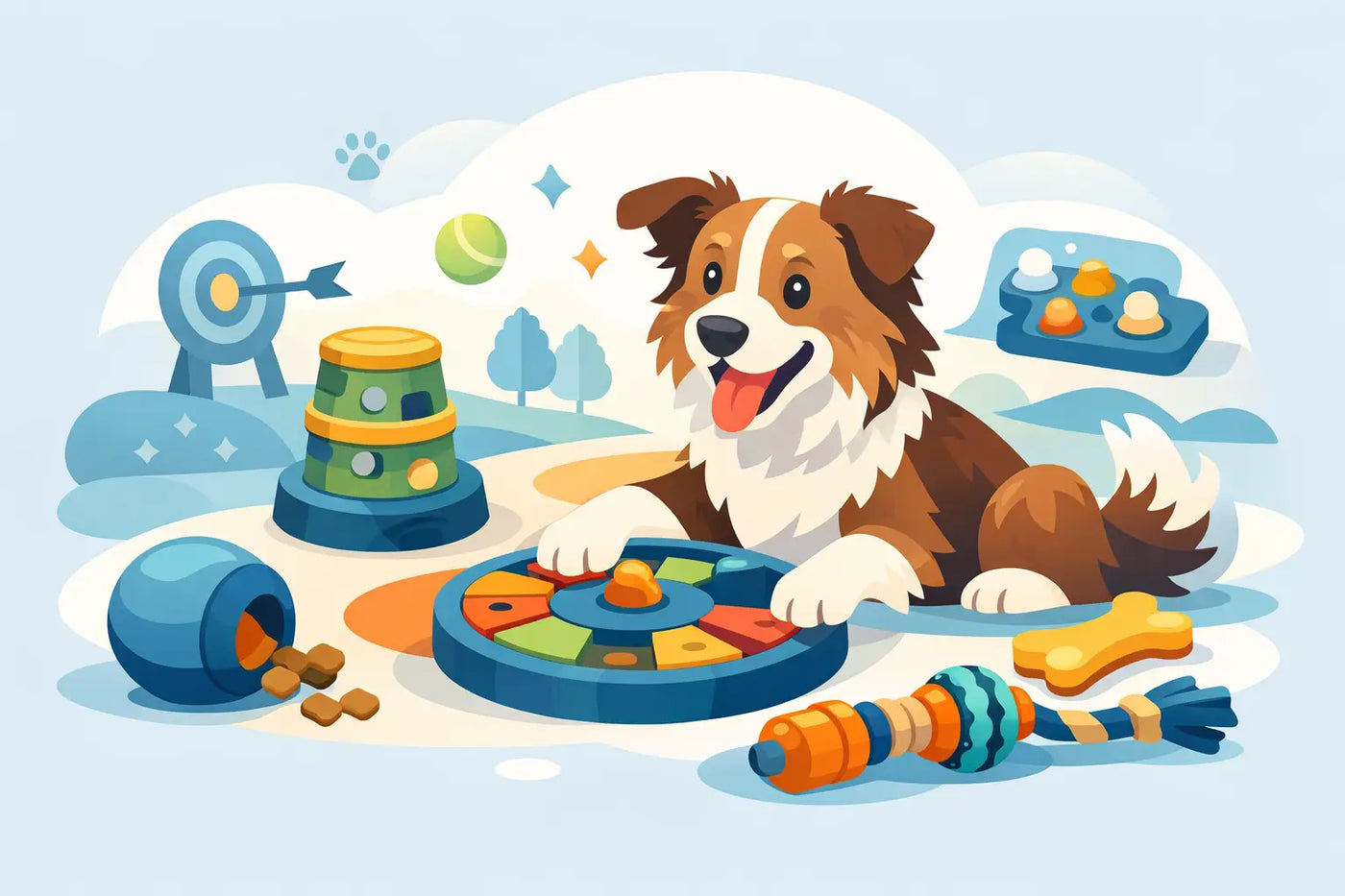
A dog that gets to use its nose, brain, and paws at home often becomes calmer, more content, and more fun to live with. Therefore, the best enrichment toys for dogs aren't just a fun extra gadget in the toy basket—they can make a big difference in everyday life, especially during rainy days, between walks, or when you want to give your dog a task that actually feels meaningful.
The great thing is that the right enrichment toy doesn't need to be advanced. It should suit the dog's size, temperament, and patience. A food-motivated Labrador often needs something different than a sensitive little companion dog, and a young dog with energy to burn rarely has the same focus as an older dog that prefers working quietly with its nose.
How to choose the best enrichment toys for dogs
The easiest mistake to make is buying the toy that looks smartest to us humans. But dogs don't care about design or trends. They care about the feeling of succeeding, getting a reward, and understanding the task.
Therefore, start by thinking about how your dog likes to work. Some dogs love to nudge, roll, and get treats out through movement. Others want to sniff, search, and fiddle with their paws or nose. If you have a dog that easily gets frustrated, it’s wise to choose something simple at first. Too high a difficulty level right away can make the game end before it has even had a chance to start.
The material also matters. Soft textile toys can be cozy for scent work and quieter moments, while harder rubber toys are often better suited for dogs that chew more powerfully. If your dog is eager and strong, you need to prioritize durability. If your dog, on the other hand, is cautious and likes to lick or poke for a long time, a simpler model might go a long way.
Different types of enrichment toys that are actually used
There are plenty of products that sound impressive, but in practice, there are a few categories that usually work best in ordinary homes.
Treat balls and rolling toys
This type suits dogs that like speed and clear rewards. The dog rolls or nudges the toy to get out small pieces of dry food or treats. For many dogs, this is an easy entry point into mental stimulation because the connection between movement and reward is clear.
The good thing is that they are often easy to understand. The disadvantage is that they can be a bit noisy on hard floors and that some smart dogs solve them very quickly. For a beginner or a food-motivated dog, they are still often a safe first choice.
Lick mats and stuffable toys
If the goal is calmness rather than pace, licking activities are often worth their weight in gold. A lick mat with wet food, dog-friendly yogurt, or other dog-safe content can help the dog wind down. The same goes for stuffable rubber toys where the dog works for a long time to reach the contents.
This is extra suitable during separation training, after a walk, or when you want to create a smooth transition from activity to rest. However, it is not always the best choice for dogs that quickly start chewing everything they get their mouths on. There, you need to choose a really durable variant and keep an eye on them at first.
Scent puzzles and problem-solving toys
Scent puzzles suit dogs that like to think and work methodically. Flaps need to be opened, parts pushed aside, and little hiding spots found. It often looks very cute when the dog is concentrating, but it is also healthy brain exercise.
Here it is extra important to choose the right level. A puzzle that is too difficult can cause stress, while one that is too easy quickly becomes uninteresting. Many dog owners notice that it works best to have two or three different models and vary between them, rather than putting everything into one single advanced game.
Snuffle mats and fabric-based scent work
For dogs that love to use their noses, snuffle mats are often a favorite. Treats or kibble are hidden in strips of fabric, and the dog gets to search calmly and focused. This is a simple but very appreciated form of stimulation that often suits puppies, adult dogs, and seniors alike.
The advantage is that the pace becomes naturally calm. The disadvantage is that some dogs go from sniffing to pulling and tearing at the mat itself. If that happens, shorter sessions and clear introduction can make a big difference.
Best enrichment toys for dogs based on dog type
All dogs need stimulation, but not in the same way. That is where many purchases go wrong.
If you have a puppy, simplicity is almost always best. The puppy needs to understand the game quickly and feel clever. Soft scent games, simple treat balls, and short sessions with a lick mat often work better than advanced puzzles.
For young dogs with lots of energy, the combination of movement and problem-solving is often smart. They need to release their intensity, but also train their patience. In that case, rolling treat toys and slightly more challenging puzzles can be a nice mix.
Adult dogs vary the most. A confident and experienced dog might appreciate more difficult tasks, while a stress-sensitive dog often does best with calmer stimulation where the nose can work at its own pace. For seniors, it is often about accessibility. The toy should not be too heavy, too hard, or require too much physical force. Here, scent work, lick mats, and lighter puzzles are often a better choice than fast-paced solutions.
Common mistakes when buying enrichment toys
A common mistake is thinking that more expensive is always better. That is not true. The best toy is the one your dog actually wants to use repeatedly, not the one that looks most well-thought-out on the shelf.
Another mistake is introducing the toy without help. Many dogs need an easy start. Show how it works, use extra tasty treats, and finish before the dog gets tired. It should feel fun to succeed.
Many also forget that variety is needed. If the same toy comes out every day, it easily loses its charm. Rotate between a few different favorites so they feel more exciting when they do appear.
And then there is safety. An enrichment toy should always fit the dog's size and chewing strength. If something starts to come loose, crack, or get too worn, it's time to replace it. This is especially true for strong chewers who can quickly turn a nice toy into a safety hazard.
How to make the toy a part of everyday life
It doesn't have to be complicated to use enrichment toys regularly. In fact, they often work best in small moments, not as big projects. Fifteen minutes of focused scent work can do more for many dogs than yet another short, stressful walk around the block.
Try using them in natural situations during the day. A lick mat while you finish working at the computer. A simple scent puzzle when the weather is miserable and the walk was shorter than usual. A treat toy that serves parts of dinner instead of everything ending up in the bowl in ten seconds.
This is also a nice way to make indoor life richer, especially for dogs that live an active family life but still need help landing between adventures, visitors, and daily chores. For many dog owners, that is exactly where the best products show their value—not in theory, but on completely ordinary Tuesdays.
What is best actually depends on the goal
If you want to tire a dog out mentally, a scent puzzle or a snuffle mat can be perfect. If you want to create calm, a lick mat or stuffable toy is often better. If you want to make mealtime more fun, a treat dispenser or rolling toy works well.
So, there isn't one single right answer to the question of which are the best enrichment toys. It depends on whether your dog needs more self-confidence, more focus, more occupation, or just a soft path to rest after a long day.
For many families, a small combination works best—something for the nose, something for licking calmness, and something for active problem-solving. Then you can choose according to the dog's daily form, the weather, and energy levels. It becomes both more sustainable and more fun for the dog.
If you want to make it easy for yourself, think less about finding the perfect product and more about building an everyday life where your dog gets to feel included, occupied, and content. That is often where the really great purchases start—with a dog that has something meaningful to do and an owner who notices how much calmer the whole day becomes.